
30-Second Quick Read: Key Takeaways
- Core Definition: USDC represents a digital stablecoin pegged 1:1 to the US dollar, issued by the regulated financial institution Circle. This setup guarantees that every single USDC token is backed by an equivalent amount of US dollars or short-term US Treasury bonds, providing a reliable bridge between fiat and blockchain.
- Key Advantages and Uses: It stands out with exceptional transparency and regulatory compliance, making it the go-to ‘digital dollar’ for institutional investors diving into DeFi, handling cross-border payments, or hedging against the wild volatility of crypto markets. Its structure ensures seamless integration into various financial activities without the typical price swings.
- Investment Risks and Current Landscape: While it excels in compliance, USDC still carries centralized risks and vulnerabilities tied to the stability of its reserve banks, as seen in the 2026 depegging incident. Additionally, it faces stiff competition from USDT’s dominant market share, which influences its growth trajectory.

What is USDC (USD Coin)? A 3-Minute Guide to Mastering Its Core Concepts
In the vast and ever-expanding universe of cryptocurrencies, USDC (USD Coin) emerges as a pivotal player that stands apart from the crowd. Unlike the high-volatility assets like Bitcoin or Ethereum, USDC functions as a fiat-collateralized stablecoin, essentially acting as a ‘digital dollar.’ This means its value is meticulously anchored to the US dollar at a precise 1:1 ratio, ensuring stability and predictability for users seeking a dependable store of value or medium of exchange. At its heart, every USDC token is supposed to mirror exactly one US dollar, supported by real-world reserves of dollars or equivalent assets, which eliminates the guesswork associated with crypto price swings.
The issuer behind this innovation is Circle, a prominent US-based crypto financial services firm, which initially partnered with Coinbase to form the Centre Consortium and propel USDC forward. This reputable backing infuses USDC with unparalleled transparency and adherence to regulations, setting it leagues ahead of many competitors in the stablecoin arena. Picture this: when navigating the turbulent crypto markets, you want to trade or hold value without the rollercoaster of Bitcoin’s or Ethereum’s price fluctuations—USDC steps in as your safe harbor. It empowers dollar-denominated transactions directly on the blockchain, whether for swift cross-border remittances, lending and borrowing in decentralized finance (DeFi) protocols, or simply shielding your portfolio from market downturns. In essence, USDC transforms into ‘digital cash’ that’s always ready for action.
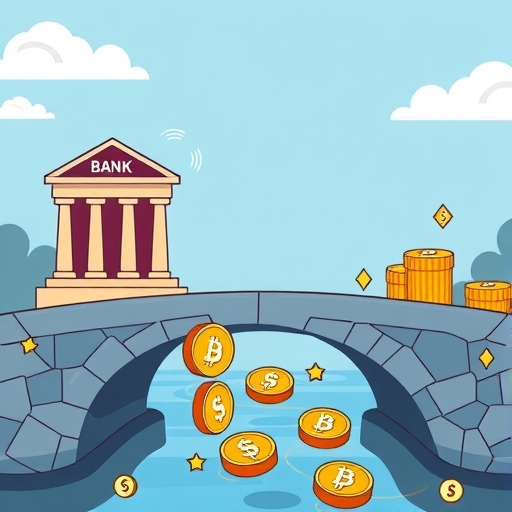
Translating this into familiar traditional finance terms, USDC is like the dollars sitting securely in your bank account, but digitized and supercharged by blockchain technology. This hybrid design not only borrows the dollar’s inherent stability but also leverages blockchain’s speed, immutability, and programmability to redefine efficiency. Far beyond a mere token, USDC serves as a vital conduit linking traditional finance (TradFi) with the decentralized finance (DeFi) realm, streamlining global fund flows with lower costs and borderless accessibility. By peering through this lens, you’ll quickly grasp why stablecoins like USDC form the indispensable backbone of the crypto ecosystem, enabling everything from everyday transactions to sophisticated financial strategies.
How Does USDC Actually Work? What Sets It Apart from Bitcoin and Ethereum?
To truly grasp USDC’s operational mechanics, it’s essential to first highlight its fundamental distinctions from native cryptocurrencies like Bitcoin or Ethereum. The value of Bitcoin and Ethereum stems primarily from market dynamics, network effects, and their decentralized architectures, resulting in significant price volatility driven by speculation and adoption trends. In stark contrast, USDC operates as a fiat-collateralized stablecoin, where its price stability is engineered through direct ties to real-world assets, specifically the US dollar, creating a buffer against the crypto market’s inherent unpredictability.
The Minting and Burning Mechanism: The Engine Behind Stability
At the core of USDC’s functionality lies the ‘minting and burning’ process, a sophisticated system that maintains its peg. When a user wants to convert fiat dollars into USDC, they deposit funds into Circle-designated bank accounts. Once verified—typically through secure banking channels—Circle activates smart contracts to ‘mint’ an identical amount of USDC tokens, which are then transferred to the user’s blockchain wallet. This process isn’t arbitrary; it’s triggered only after confirming the reserves, ensuring no over-issuance occurs. Conversely, to redeem USDC back to dollars, users send tokens to Circle’s address, prompting the smart contract to ‘burn’ them—permanently removing them from circulation—while Circle wires the equivalent fiat from reserves. This closed-loop 1:1 redemption mechanism acts as the bedrock of USDC’s stability, as it aligns supply precisely with backed reserves at all times, preventing inflationary pressures or depegging risks inherent in uncollateralized systems.
Fiat Collateralization and Unmatched Transparency
USDC’s fiat-backed nature means every token is underpinned by tangible assets held in reserve, a far cry from purely algorithmic stablecoins. These reserves aren’t just idle cash; they’re strategically allocated—roughly 80% in short-term US Treasury bonds for yield generation and liquidity, with the remaining 20% in cash equivalents for immediate redemptions. To foster trust, Circle commissions independent audits from top firms like Deloitte on a monthly basis, publishing detailed ‘attestation reports’ that verify the reserves match circulating supply. These public documents break down asset compositions, custodian banks, and total holdings, offering a level of scrutiny that contrasts sharply with less transparent stablecoins, thereby reassuring users and regulators alike about the system’s integrity.
Multi-Chain Deployment and Smart Contract Integration
Unlike Bitcoin’s singular blockchain confinement, USDC embraces a multi-chain paradigm for broader accessibility. It originated as an ERC-20 token on Ethereum, adhering to its battle-tested smart contract standards for seamless interoperability within Ethereum’s vast ecosystem. However, to address high gas fees and ecosystem fragmentation, Circle has expanded USDC to over 30 blockchains, including high-throughput networks like Solana, Avalanche, Arbitrum, Base, and Polygon. This strategic multi-chain rollout enhances composability, allowing USDC to fuel DeFi apps across diverse environments while minimizing transaction costs and latency. Developers and users benefit from native support, enabling fluid transfers and interactions without cumbersome wrappers or bridges in many cases.
In summary, USDC diverges profoundly from Bitcoin’s ‘digital gold’ decentralization or Ethereum’s ‘world computer’ programmability by prioritizing regulated collateralization and peg stability. It’s purposefully crafted as a compliant ‘digital dollar,’ optimized for reliable value transfer in blockchain environments where consistency trumps speculation.
What Are USDC’s Tokenomics? Supply, Distribution, and Inflation Mechanics Explained
USDC’s tokenomics differ markedly from those of Bitcoin or Ethereum, eschewing fixed caps or pre-mined allocations in favor of a model laser-focused on value stability and fiat redeemability. This approach reflects its role as a stablecoin rather than a speculative asset, where supply elasticity serves real-world demand rather than artificial scarcity.
Unlimited Supply with Dynamic Adjustments: Adapting to Market Needs
A defining feature of USDC is its uncapped maximum supply, which expands or contracts dynamically based on user demand for digital dollars. Tied directly to the mint-and-burn mechanism discussed earlier, new USDC enters circulation only when equivalent fiat bolsters reserves, scaling supply proportionally. When redemptions surge, burning reduces supply accordingly, maintaining the 1:1 parity without relying on halving events like Bitcoin or exposing itself to algorithmic death spirals. This elasticity ensures USDC remains responsive—growing during bull markets for DeFi liquidity or shrinking amid fiat flight—while anchoring value to audited reserves, a pragmatic design born from the need for scalable, on-demand stable value in global crypto trading.
Reserve Structure and Transparency: The Pillars of Trust
Central to USDC’s tokenomics is its reserve composition, blending security with modest yield. Approximately 80% resides in short-term US Treasuries, prized for their low-risk profile and liquidity, while 20% stays in cash at regulated US banks for instant payouts. Held by compliant custodians, these assets generate interest income that sustains Circle’s operations. Monthly attestations from Deloitte provide granular breakdowns—circulating supply figures, asset breakdowns, and bank locations—accessible publicly via Circle’s website. This rigorous reporting, mandated by US regulations, builds investor confidence by allowing real-time verification, distinguishing USDC in a field plagued by opacity concerns.
No Traditional Inflation: Pegged to Dollar Dynamics
USDC sidesteps conventional inflation mechanics entirely, as its purchasing power mirrors the US dollar’s rather than internal issuance policies. Supply growth meets demand without diluting value, since expansions require matching reserves; thus, no halving or burning incentives apply. Any erosion in real value stems from broader USD inflation, not token economics. This dollar-tethered stability positions USDC as blockchain’s fiat proxy, where ‘inflation’ is exogenous, emphasizing reliability over yield farming gimmicks prevalent in other cryptos.
Ultimately, USDC’s tokenomics embody simplicity and robustness: strict 1:1 fiat backing, transparent oversight, and elastic mint/burn cycles ensure enduring peg integrity. This contrasts sharply with scarcity-driven or algorithmic models, cementing its status as the stablecoin gold standard.
What is the History and Evolution of USDC? Key Milestones and Turning Points
USDC’s origins trace back to a pressing need for stability in crypto markets and a bold vision to import traditional fiat assets onto blockchains. Its journey mirrors the stablecoin sector’s maturation, marked by innovation, regulatory hurdles, and resilience.
The Birth of Centre Consortium and Early Momentum
The saga began in 2018 when Circle Internet Financial and Coinbase launched the Centre Consortium, establishing open standards and governance for fiat-backed stablecoins. Circle CEO Jeremy Allaire championed this, aiming to digitize the world’s reserve currency—the USD—for frictionless global circulation on blockchains. Debuting as an ERC-20 on Ethereum, USDC quickly gained traction in nascent DeFi, its compliance-first ethos contrasting with rivals like USDT’s reserve controversies. This foundation attracted institutions wary of unregulated alternatives, fueling early adoption through transparent reserves and redeemability.
Pivotal Milestones and Ecosystem Growth
- 2021: Visa Announces USDC Settlement Support. This landmark integration validated stablecoins for payments, boosting USDC’s credibility as Visa enabled merchants to settle in USDC. It opened doors to commercial use cases, signaling TradFi’s embrace of blockchain efficiency for faster, cheaper remittances.
- Multi-Chain Expansion Strategy: Responding to Ethereum’s scalability limits, USDC rolled out to Solana, Avalanche, Polygon, Arbitrum, Base, and dozens more. This broadened its reach, injecting liquidity into fragmented ecosystems and powering diverse DeFi innovations like yield farming and perpetuals.
Trials, Transformations, and Resilience
- 2026 March: Silicon Valley Bank (SVB) Collapse Crisis. A stark test came with SVB’s failure, where Circle held cash reserves, sparking panic and a brief depeg to $0.88. Swift government backstops and Circle’s actions restored the peg, but it spotlighted custodial bank risks, spurring diversified reserve strategies and industry-wide scrutiny.
- 2026 August: Centre Consortium Dissolution. After years of collaboration, Circle assumed full governance, dissolving Centre to streamline decisions. This shift empowered faster innovations, marking USDC’s transition to independent maturity under Circle’s stewardship.
Looking Ahead: Regulatory Tailwinds and Global Ambitions
Gazing forward, USDC navigates regulatory flux, yet US frameworks like the potential 2026 GENIUS Act promise clarity for payment stablecoins. Such legislation could unleash institutional inflows, solidifying USDC’s role in digital economies amid CBDC rises. Its history—from consortium launch to crisis recovery—illustrates a stablecoin forging ahead through compliance, adaptation, and unyielding focus on trust.
What Are the Pros and Cons of USDC? A Comprehensive Risk Assessment Before Investing
Before diving into USDC for holdings or transactions, a thorough pros-cons analysis is crucial. As the second-largest stablecoin, it balances stellar strengths with risks demanding careful evaluation.
USDC’s Standout Advantages
- Superior Transparency and US Regulatory Compliance: USDC’s edge lies in Circle’s regulated status, with monthly Deloitte-attested reports detailing reserves (cash/Treasuries) and custodians. Akin to banks’ balance sheets, this openness reassures institutions, far outpacing opaque peers.
- Robust Liquidity and Versatile Applications: Ubiquitous on exchanges and DeFi, USDC powers trading pairs, remittances, payroll, lending, mining, and NFTs. Multi-chain support across 30+ networks ensures seamless use, amplifying its utility globally.
- Reliable Value Stability: Pegged 1:1 to USD, it shields against crypto volatility, ideal for traders parking funds or executing strategies without price risk.
- Institutional Backing and Growth Potential: Endorsements from Coinbase, Visa, and others, plus regulatory progress, position USDC for mainstream finance integration and explosive adoption.
USDC’s Drawbacks and Key Risks
- Centralization Vulnerabilities: Circle’s control enables minting, burning, and blacklisting addresses for compliance, clashing with crypto’s decentralization ethos and risking asset freezes.
- Reserve Bank Stability Exposure: The 2026 SVB episode underscored fiat custodian fragility, where bank failures could trigger depegs despite recoveries.
- Regulatory Shifts: Evolving rules like GENIUS Act offer clarity but could impose restrictions impacting operations or adoption.
- Fierce Competition: USDT’s dominance challenges USDC’s share, demanding ongoing innovation to compete on liquidity and features.
Overall, USDC shines as a compliant, liquid digital dollar for stability seekers, but centralization and reserve risks warrant diligent due diligence.
How Can You Acquire or Stake USDC? Step-by-Step Guide to Passive Income
USDC’s liquidity opens doors to easy acquisition and yield generation via staking-like activities. Here’s how to get started safely.
Step-by-Step Ways to Acquire USDC
- Buy on Centralized Exchanges (CEX): Simplest route via platforms like Binance, OKX, Coinbase, Kraken, or Taiwan’s MAX/BitoPro.
- Register and KYC: Complete account setup and ID verification for compliance.
- Fiat Deposits: Fund via bank transfers, cards, supporting TWD/USD.
- Trade: Swap fiat or crypto (USDT/ETH/BTC) for USDC, e.g., TWD pairs on MAX.
- Swap on Decentralized Exchanges (DEX): Use Uniswap, PancakeSwap, Curve with wallets like MetaMask to trade ETH/DAI/USDT for USDC, paying gas fees.
- Direct Circle Redemption: Institutions swap large USD volumes directly with Circle.
Earning Passive Income by ‘Staking’ USDC
USDC lacks PoS staking; yields come from lending or liquidity provision. Explore these avenues:
- DeFi Lending Protocols:
- Aave/Compound: Deposit for borrower interest, rates fluctuating with demand—often beating banks.
- Risks: Smart contract bugs, liquidations, hacks.
- Liquidity Mining:
- Pair USDC with ETH/DAI in DEX pools for fees and token rewards.
- Risks: Impermanent loss from price divergence.
- CEX Earn Products:
- Binance/OKX flexible/fixed terms for steady APY.
- Risks: Platform insolvency, variable yields.
- Yield Aggregators:
- Yearn auto-optimizes across protocols.
- Risks: Complex contracts heighten exposure.
Always research mechanisms, yields, and risks matching your tolerance—stablecoins enable income but demand caution.
What Does the Future Hold for USDC? Tech Upgrades, Challenges, and Opportunities
USDC’s trajectory intertwines with digital economy growth and regulations, promising upgrades amid hurdles.
Technological Advancements and Expansion
- Cross-Chain Transfer Protocol (CCTP): Circle’s trustless native transfers—burn on source, mint on destination—sidestep bridge risks, boosting multi-chain fluidity.
- Broadening Chain Integrations: Ongoing additions to performant L1s/L2s sustain liquidity in emerging DeFi hubs.
- Deepening Payments Infrastructure: Partnerships target enterprise payments, payroll, trade finance for real-world scale.
Regulatory Landscape and Institutional Surge
- Post-GENIUS Act Boom: 2026’s potential Act could federalize oversight, catalyzing institutional floods into USDC.
- CBDC Dynamics: USDC may compete or complement CBDCs via superior innovation and chains.
Persistent Challenges
- Centralization Debates: Balancing compliance with decentralization remains key amid blacklisting concerns.
- Competitive Pressures: USDT leads; relentless innovation is vital.
- Macro Influences: USD policies indirectly sway sentiment.
USDC eyes cornerstone status via innovation, regulation embrace, and use-case growth, primed for crypto’s next era.
Frequently Asked Questions (FAQ)
Is USDC Safe? Could It Collapse Like Luna?
USDC ranks among the safer stablecoins due to its fiat-collateralized model, where each token is backed by equivalent USD or short-term US Treasuries. This differs fundamentally from Luna’s UST, an algorithmic stablecoin reliant on intricate mint-burn arbitrage that unraveled in a confidence crisis, triggering a death spiral. USDC’s strength derives from verifiable physical reserves and routine audits. That said, it briefly depegged in March 2026 amid the SVB collapse, highlighting centralized reserve risks—yet Circle’s response and backing restored parity, affirming reserve robustness.
USDC vs USDT: What’s the Difference? Which is Better?
Both peg 1:1 to USD, but differences abound—’better’ hinges on priorities:
- Transparency/Compliance: USDC excels via Circle’s regulation and Deloitte audits; Tether faced past opacity critiques, though improving.
- Market Share/Liquidity: USDT dominates volume historically; USDC grows strong in DeFi.
- Risk Appetite: Choose USDC for compliance/trust, USDT for liquidity dominance. Many diversify across both.
Is USDC Always Exactly $1?
Theoretically, yes—via mint-burn and full reserves. Practically, supply shocks or events like 2026’s SVB depeg (to sub-$1) cause temporary deviations. Arbitrage and confidence restore it swiftly, but risks persist.
How to Buy USDC in Taiwan?
Main options:
- Taiwan Exchanges: MAX or BitoPro—deposit TWD via bank, trade directly. Compliant and user-friendly.
- Global Platforms: Binance/OKX/Bybit/Coinbase via cards or C2C. Mind fees/cross-border rules.
Always KYC and verify fund legitimacy.
