
30-Second Quick Read: Key Takeaways on PENGU
- Official Native Token: PENGU serves as the official native token for the top Web3 IP “Pudgy Penguins,” designed to bridge physical retail IP with on-chain ecosystems. It acts as the central currency powering social interactions and gaming economies within this vibrant community, creating a seamless flow between real-world merchandise and digital experiences that keeps users engaged across multiple touchpoints.
- Phygital Strengths: PENGU stands out with its robust “phygital” capabilities, where sales of physical toys drive digital user growth. Token holders can spend PENGU on in-game purchases within Pudgy World, earn rewards from IP licensing, and participate in community governance, effectively turning everyday consumers into active blockchain participants through this innovative hybrid model.
- Meme Coin Risks: Even with solid physical industry backing, PENGU retains the high volatility typical of meme coins. Currently lacking a formal whitepaper, its long-term value hinges heavily on the widespread adoption and success of the Pudgy World game, which could either propel it forward or expose it to significant market uncertainties if player engagement falls short.

What is Pudgy Penguins (PENGU)? A 3-Minute Guide to Understanding Its Core Concepts
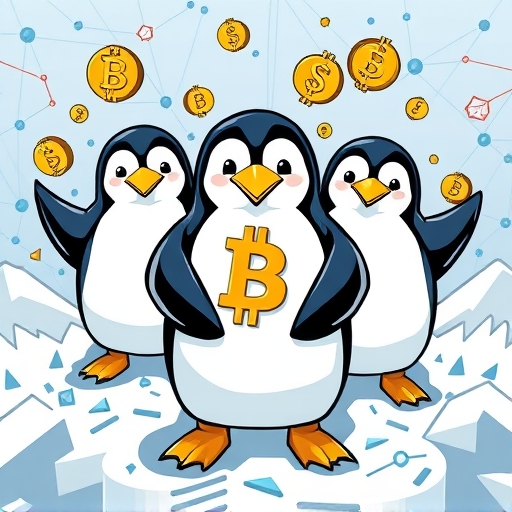
Pudgy Penguins (PENGU) represents an SPL token launched on the Solana blockchain, going far beyond a simple cryptocurrency to embody a distinctive phenomenon in the Web3 landscape—the beating heart of the elite NFT brand “Pudgy Penguins” ecosystem. At its core, PENGU aims to function as the foundational element of its social and gaming economy, forging a tight connection between physical retail intellectual property and on-chain activities. Picture this: an adorably plump penguin character that doesn’t just dominate digital spaces but also graces shelves in your local stores, with PENGU acting as the vital link that unites these worlds. This “phygital” strategy—blending physical and digital realms—sets PENGU apart dramatically from typical meme coins, as it pushes boundaries to create broader real-world use cases for crypto, drawing in users who might otherwise never touch blockchain technology.
Delving deeper, PENGU’s positioning as a “social currency” means it’s not merely a speculative asset but a medium for interactions, rewards, and governance among members of the Pudgy Penguins community known as “The Huddle.” This mirrors loyalty points in traditional finance, like airline miles or store credits, but elevates it by granting users true ownership and a voice in the brand’s evolution—something revolutionary in crypto circles. By leveraging sales of physical toys, PENGU channels massive Web2 audiences into Web3, generating ongoing external demand that sustains its ecosystem. Translating this into familiar terms, think of PENGU as the official token for a Disney theme park: you spend it on rides, games, and even vote on park features, all while the park’s reach grows from online hype to physical locations worldwide, ensuring constant influxes of new participants.
It’s worth noting that Pudgy Penguins’ ascent wasn’t without hurdles. The project started with four college students in its early days, only to face a dramatic pivot in 2022 when entrepreneur Luca Netz acquired it for 750 ETH amid near-collapse. Netz didn’t just stabilize it; his marketing prowess transformed Pudgy Penguins from mere NFT images into a global cultural powerhouse, landing physical toys in giants like Walmart. This narrative—from Web3 native IP expanding into Web2 physical retail—provides PENGU with compelling storytelling and tangible utility, illustrating how a digital artwork can evolve into a thriving business empire that rewards token holders at every step.
How Does Pudgy Penguins (PENGU) Work? What Makes It Different from Bitcoin and Ethereum?
The operational mechanics of PENGU revolve around its implementation as an SPL token on the Solana blockchain, presenting fundamental differences from pioneers like Bitcoin and Ethereum. Bitcoin pioneered as a “peer-to-peer electronic cash system,” prioritizing decentralization and security above all, which made it ideal for value storage but less so for high-volume transactions. Ethereum revolutionized the space with smart contracts, enabling programmable blockchains for DeFi and NFTs, yet it often grapples with network congestion and exorbitant gas fees during peak usage. PENGU opts for Solana to sidestep these issues entirely, optimizing for consumer-friendly crypto that supports everyday interactions without friction.
Solana SPL Token Standard and Its Key Advantages
As a Solana SPL Token, PENGU adheres to Solana’s standardized token protocol, which unlocks a suite of benefits tailored for modern applications. Solana earns its reputation through “high throughput” and “ultra-low gas fees,” powered by an innovative Proof of History (PoH) consensus layered atop Proof of Stake (PoS). This combo allows Solana to process tens of thousands of transactions per second (TPS)—dwarfing Bitcoin’s roughly 7 TPS and Ethereum’s variable 15-30 TPS under normal conditions. Essentially, it’s like upgrading from a congested single-lane road to a multi-lane superhighway, enabling PENGU transactions to confirm in seconds for pennies. For scenarios like in-game purchases in Pudgy World, where speed and cost matter most, this eliminates user pain points: no more waiting minutes or hours, no hefty fees eating into small spends, making it primed for mass adoption in gaming and social economies.
Cross-Chain Capabilities and Ecosystem Integration
While primarily anchored on Solana, PENGU’s architecture supports cross-chain functionality, paving the way for bridges to Ethereum, Abstract, and beyond. This multi-chain approach expands reach by allowing seamless asset transfers via cross-chain bridges, unifying fragmented ecosystems. Originally, Pudgy Penguins NFTs launched on Ethereum, so integrating PENGU from Solana bridges the gap, letting NFT owners interact fluidly with tokens—perhaps staking NFTs for PENGU yields or using them interchangeably in games. This reflects Web3’s shift toward interoperability, avoiding silos and fostering a diverse, interconnected landscape where PENGU thrives across platforms.
In essence, PENGU’s workings leverage Solana’s high-performance backbone with multi-chain scalability, focusing on user-centric experiences to fuel a sprawling phygital IP ecosystem. Unlike Bitcoin’s store-of-value purity or Ethereum’s computational versatility, PENGU emphasizes practical, low-friction utility for social and gaming dominance.

What Are Pudgy Penguins (PENGU) Tokenomics? A Deep Dive into Supply, Allocation, and Inflation Mechanics
PENGU’s tokenomics are crafted to underpin its powerhouse brand IP while fueling community engagement and growth. Its standout feature—a fixed total supply with no emission schedule—echoes Bitcoin’s hard cap, preventing dilution and instilling scarcity that could bolster long-term holder confidence in a market rife with inflationary tokens.
Maximum Token Supply and Inflation Mechanics
Capped at 88,888,888,888 tokens (roughly 88.9 billion), PENGU’s supply is locked in, shielding it from central bank-style inflation that plagues fiat currencies. Without built-in minting, this design promotes value preservation, as demand from ecosystem utility must chase a finite pool. Moreover, unclaimed airdrop portions might trigger burn mechanisms or recirculations, shrinking circulating supply over time—a proven tactic in crypto to heighten scarcity, much like stock buybacks in traditional markets that reward shareholders by concentrating ownership.
PENGU Token Allocation Breakdown
The allocation strategy underscores priorities in community rewards, expansion, and sustainable operations:
- Pudgy Community (The Huddle) – 25.9%: Dedicated to rewarding Pudgy Penguins and Lil Pudgys NFT holders plus active members, this chunk fosters loyalty by distributing via airdrops or staking, ensuring early supporters reap ongoing benefits and strengthening communal bonds essential for organic growth.
- Other Communities and New Users – 24.12%: Aimed at onboarding fresh faces through airdrops, partnerships, or incentives, this portion bridges Web2 and Web3 users, systematically scaling the ecosystem without relying solely on speculation.
- Team Reserve – 17.8%: Allocated to developers and operators with strict vesting—like a 1-year cliff and 3-year linear release—this aligns incentives for long-haul commitment, mitigating dump risks that plague short-term teams and signaling dedication to investors.
- Liquidity Pool – 12.35%: Fuels DEX liquidity on platforms like Raydium or Jupiter, minimizing slippage for trades and stabilizing prices, which is crucial for retail accessibility and healthy market dynamics.
- Remaining Portions: Likely earmarked for ecosystem funds, marketing, and partnerships, with details to emerge in official docs, ensuring holistic development akin to a balanced corporate equity structure.
This framework paints PENGU as a community-led venture with team accountability and market robustness, comparable to a public company’s IPO where shares go to insiders, employees, and public floats for enduring stability and expansion.
What is the History and Evolution of Pudgy Penguins (PENGU)? Key Milestones Explained
Pudgy Penguins’ journey is a rollercoaster of drama, reinvention, and triumph—from an Ethereum NFT launch to a worldwide Web3 cultural icon birthing PENGU. Breaking it down by phases reveals how resilience and vision turned potential failure into explosive growth.
2021 July: Birth of the NFT Collection and Early Success
Launched in July 2021 on Ethereum by four college students, the Pudgy Penguins NFT series captivated with its charming, chubby penguin designs amid the NFT boom. It quickly ascended to blue-chip status, with floor prices soaring on hype and strong community vibes, drawing collectors who saw it as more than art—a budding cultural force.
2022: Credibility Crisis and Luca Netz’s Heroic Acquisition
Trouble struck early 2022 with the “Great Blizzard” scandal—allegations of mismanagement and fund misuse eroded trust, crashing floor prices and nearly dooming the project. Enter Luca Netz in April 2022, snapping it up for 750 ETH (around $2.5M), hailed as a community savior. His expertise in branding and ops wiped the slate clean, setting the stage for revival.
Brand Reinvention and Phygital Pivot
Under Netz, Pudgy Penguins morphed into a commercial juggernaut, championing phygital by landing Pudgy Toys in Walmart and Target by 2023. These toys, embedded with NFC chips, funnel physical buyers into digital realms like Pudgy World, masterfully converting Web2 masses to Web3 without friction—a blueprint for NFT projects everywhere.
2025 December: PENGU Token Launch and Airdrop Event
Building on retail wins and brand momentum, Pudgy Penguins debuted PENGU on Solana in December 2025, airdropping massively to eligible NFT holders. This milestone ushered in a new era, positioning PENGU as the go-to currency for games, licensing perks, and governance.
Future Outlook: Pudgy World and Beyond
Looking to 2026, Pudgy World launches as an immersive metaverse where users bond with penguins, play, and transact via PENGU. This saga—from pixel art to global brand—culminates with PENGU as the engine for endless expansion.
What Are the Pros and Cons of Pudgy Penguins (PENGU)? Full Risk Assessment Before Investing
Weighing any crypto investment demands a balanced view of strengths and pitfalls. PENGU, tied to a robust IP, offers unique upsides but demands caution amid crypto’s wild nature.
Main Advantages of PENGU
PENGU shines brightest through its Pudgy Penguins IP and phygital model, which few rivals match.
- Powerful Physical Retail Backing: Securing shelves at Walmart and Target is a feat most crypto projects dream of, generating steady revenue while onboarding millions from Web2 via toys. Like a tech firm with global stores, this builds unshakeable user foundations and brand loyalty for PENGU demand.
- Massive Social Media Buzz and Recognition: Billions of views on TikTok and Instagram make Pudgy Penguins a pop culture staple, slashing marketing costs and priming PENGU for viral adoption among non-crypto natives.
- Listing on Top Exchanges: Availability on Binance, Coinbase, etc., boosts liquidity, accessibility, and visibility, validating market confidence.
- Strong Community Loyalty (The Huddle): This hyper-active group weathers storms, drives hype, and builds the project organically—a Web3 superpower.
Main Drawbacks and Risks of PENGU
Crypto’s realities persist despite strengths.
- Extreme Price Volatility: Meme traits amplify swings from sentiment or macro shifts, offering highs but risking rapid drops.
- No Formal Whitepaper Yet: Lacking detailed docs hampers transparency on tech, roadmaps, and models, breeding uncertainty.
- NFT Floor-Token Linkage Risks: NFT slumps could drag PENGU, given their interdependence.
- Fierce Competition and Saturation: Endless new memes demand constant innovation to stay ahead.
- Pudgy World Adoption Uncertainty: Long-term value rides on game success; flops could undermine utility.
PENGU blends phygital promise with high-stakes crypto dynamics—prime for bold investors with solid risk controls.
How Can You Acquire or Engage with the PENGU Ecosystem? Passive Income Strategies
Diving into PENGU goes beyond trading; multiple paths offer passive yields by contributing to its thriving community.
Hold Pudgy Penguins/Lil Pudgys NFTs for Airdrops
Early adopters snagged big via 2025 December airdrops to NFT holders. Future perks like exclusive game items or governance votes persist, akin to shareholder dividends plus board seats.
Provide Liquidity on Solana DEXs
Stake PENGU pairs on Jupiter or Raydium for fees and rewards.
- Liquidity Mining: Pair with SOL/USDC, earn shares of fees—like bank interest on deposits.
- Risk Note: Impermanent loss looms if prices diverge sharply; study before diving.
Earn Rewards via Pudgy World Game Tasks
Upcoming Pudgy World enables P2E plays.
- In-Game Rewards: Quests yield PENGU, blending fun with real value.
- P2E Model: Turns play into income, solidifying utility.
From NFTs to liquidity to gaming, PENGU rewards engagement—but DYOR on risks.
What Does the Future Hold for Pudgy Penguins (PENGU)? Upcoming Upgrades and Challenges
PENGU’s trajectory ties to Pudgy Penguins’ IP-driven evolution, with tech and strategy dictating its edge.
Pudgy World Full Launch
The 2026 game debut supercharges PENGU utility.
- Token Use Cases Explode: Buy items, land—driving demand.
- User Growth: Hooks gamers, funneling masses in.
Deep Integration with Abstract Chain
Ties to Abstract expand multi-chain play.
- Tech Synergies: Potential for advanced features.
- Ecosystem Scale: New chains, new users.
Global Retail Expansions and IP Royalties
More partners boost toys; royalties could share gains with holders.
Key Challenges Ahead
Rivals, regs, tech hurdles test resolve.
- Competition: Innovate or fade.
- Regulation: Evolving rules loom.
- Execution: Delays hurt.
Bright phygital prospects shine, but watch execution closely.
Frequently Asked Questions (FAQ)
Is PENGU coin worth investing in?
As the official token of Web3’s top IP “Pudgy Penguins,” PENGU boasts strong brand power, physical retail support, and community foundations—these fuel its potential. Yet, it carries meme coin volatility and lacks a detailed whitepaper. Investment appeal depends on faith in its phygital model and Pudgy World growth. All crypto involves high risk; invest only what you can afford to lose—not financial advice.
Can holding Pudgy Penguins NFTs still get airdrops?
The initial PENGU airdrop ended in December 2025. No confirmed second rounds yet, but as core assets, NFT holders may snag future perks, game rewards, or governance roles. Stay tuned to official channels for updates.
Where can I buy PENGU coin?
PENGU is listed on major exchanges, including:
- Centralized Exchanges (CEX): Binance, Coinbase, Kraken, and more.
- Decentralized Exchanges (DEX): As a Solana SPL token, trade on Jupiter, Raydium, etc.
Verify platform support and prioritize security before buying.
What is the price prediction for PENGU? Can it reach $1?
With a max supply of ~88.9 billion, $1 would demand an $88.9B market cap—toppling many leaders (e.g., Ethereum’s is in the hundreds of billions). Crypto prices are unpredictable, but hitting $1 requires massive inflows and ecosystem wins given the supply. Approach predictions rationally amid high volatility.
