
30-Second Quick Read Highlights (Key Takeaways)
- Core Definition: Polkadot stands out as a revolutionary “blockchain of blockchains,” often referred to as Layer 0 infrastructure. Its primary mission is to facilitate seamless, secure interoperability among diverse blockchains, such as Bitcoin and Ethereum, allowing them to exchange data, assets, and messages without compromising security. This approach addresses the longstanding fragmentation in the blockchain space by creating a unified hub where independent chains can connect and collaborate effectively.
- Key Advantages and Use Cases: Polkadot tackles the critical “blockchain island” problem head-on, where isolated networks struggle to interact. It achieves this through its central Relay Chain, which delivers robust shared security across the entire ecosystem, while specialized Parachains handle specific business logic and applications. This architecture unlocks unprecedented scalability, enabling the network to process massive transaction volumes in parallel. Moreover, it supports seamless upgrades without the disruptive hard forks that plague traditional blockchains, making it highly adaptable for long-term evolution.
- Investment Risks and Current Landscape: Investors should watch for waning enthusiasm around Parachain slot auctions, which have seen reduced participation lately, alongside ongoing token inflation pressures that could dilute value over time. Polkadot also faces stiff competition in the cross-chain arena from Ethereum’s Layer 2 solutions, which offer faster scaling within a familiar ecosystem, and rivals like Cosmos (ATOM), known for its hub-and-spoke model emphasizing sovereign chains connected via IBC protocol.
What is Polkadot (DOT)? A 3-Minute Guide to Mastering Its Core Concepts
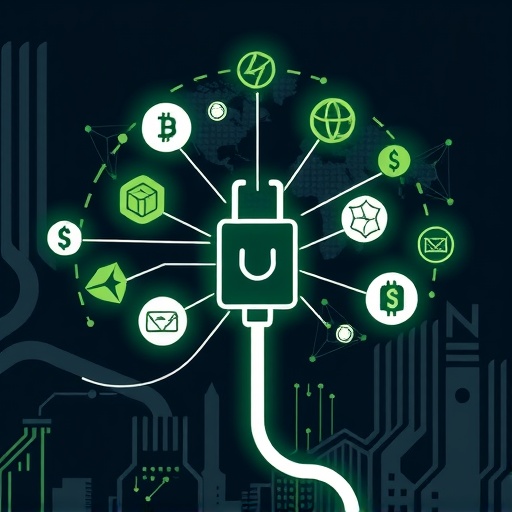
Polkadot (DOT) emerges as a groundbreaking Layer 0 blockchain protocol, fundamentally engineered to foster interoperability and shared security across a multitude of disparate blockchains. Rather than competing with established giants like Bitcoin or Ethereum, picture Polkadot as the ultimate “internet socket for blockchains”—a connective tissue that bridges these isolated systems, enabling them to share information and value transfers securely and efficiently. This innovation directly confronts the pervasive “island effect” in the blockchain world, where networks operate in silos, hindering the full realization of Web3’s decentralized potential. By peering through this lens, you’ll gain crystal-clear insight into how Polkadot’s ingenious architecture paves the way for a truly interconnected blockchain universe, where collaboration drives exponential growth.
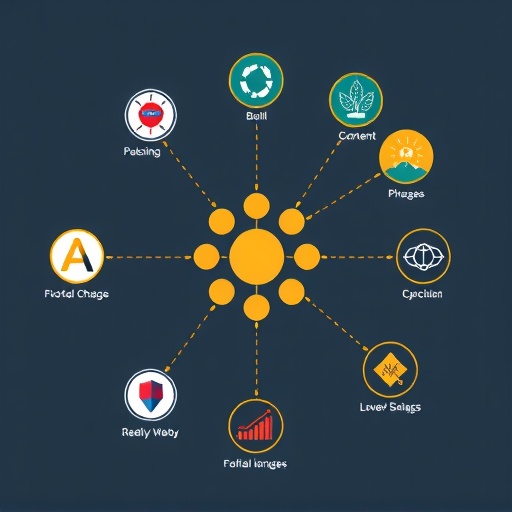
At its heart, Polkadot’s philosophy revolves around a “heterogeneous multi-chain sharding architecture.” This sophisticated design empowers a diverse array of blockchains—each with unique functions and consensus mechanisms—to operate in parallel while drawing from a common security pool. The linchpin of this system is the Relay Chain, which orchestrates consensus, enforces security protocols, and manages cross-chain messaging for the entire network. Connected to it are Parachains, autonomous blockchains that plug in like customizable modules; they define their own logic, consensus rules, and token economies tailored to specific needs. Such flexibility not only supercharges the network’s scalability for high-throughput transactions but also introduces forkless upgrades, sidestepping the contentious splits that have historically divided communities during protocol changes on chains like Ethereum.
Leveraging Polkadot’s ecosystem, developers can effortlessly launch bespoke blockchains within its framework, inheriting top-tier security from the Relay Chain without reinventing the wheel. This starkly contrasts with conventional blockchain development, where teams must bootstrap their own validation and security from scratch, often at exorbitant costs and risks. Ultimately, Polkadot envisions a decentralized web where data and assets flow freely across boundaries, sparking innovations in cross-chain DeFi protocols, decentralized identity systems, supply chain tracking, and beyond. In this future, blockchains won’t compete in isolation but thrive together, forming the backbone of a collaborative Web3 internet.
How Does Polkadot Work? What Sets It Apart from Bitcoin and Ethereum?
Polkadot’s operational blueprint hinges on its distinctive “Relay Chain-Parachain” model, marking a profound departure from the monolithic single-chain approaches of Bitcoin and Ethereum. Those legacy networks funnel every transaction and smart contract through one linear ledger, prioritizing ironclad security but at the expense of scalability bottlenecks and soaring fees during peak demand. Polkadot, by contrast, employs a divide-and-conquer strategy: it delegates specialized tasks to dedicated chains under centralized coordination from the Relay Chain. Think of it as reimagining traditional banking—where a single overburdened branch handles everything—into a network of expert departments overseen by headquarters, translated into blockchain terms for optimal efficiency.
What is the Relay Chain in Polkadot?
The Relay Chain serves as the pulsating core—or “heart”—of the Polkadot network, abstaining from application-specific tasks like executing smart contracts. Instead, it focuses laser-sharp on delivering shared security, finality guarantees (ensuring transactions are irreversibly confirmed), and inter-chain communication protocols. Every Parachain tethered to it inherits this formidable security layer, meaning even a lightly secured Parachain benefits from the collective might of the entire network’s validators. This shared model scales security economically: why duplicate efforts when one robust backbone suffices? The Relay Chain runs on Nominated Proof-of-Stake (NPoS), where Validators actively secure the network and Nominators back them with staked DOT, fostering a decentralized guardianship.
What are Parachains in Polkadot?
Parachains function as the “custom-tailored blockchains” within Polkadot, each boasting bespoke consensus engines, native tokens, and functionalities honed for particular use cases. Unlike Ethereum 2.0’s homogeneous sharding, which uniformizes fragments of the same chain, Polkadot’s Parachains embrace heterogeneity—allowing wild customization. One might optimize for DeFi lending with high-speed execution, another for NFT gaming with immersive features, and yet another for privacy-focused trades via zero-knowledge proofs. Access to the Relay Chain comes via competitive Parachain Slot Auctions, where winners lease slots for periods like two years, gaining privileged shared security and cross-chain perks. Limited slots maintain network stability, preventing overload while prioritizing committed projects.
How Do Bridges and XCMP Enable Cross-Chain Magic in Polkadot?
Completing the ecosystem are Bridges, vital conduits linking Polkadot to external realms like Bitcoin or Ethereum, and XCMP (Cross-Chain Message Passing), the protocol powering Parachain-to-Parachain dialogues. Bridges, for instance, allow ERC-20 tokens from Ethereum to migrate securely into Polkadot, unlocking new liquidity pools. XCMP standardizes message exchanges between Parachains, ensuring atomic, reliable swaps of data or assets—critical for composable apps like multi-chain DEXes. Together, the Relay Chain’s security foundation, Parachains’ versatility, and these connectors weave a tapestry of expansive, interoperable scalability, positioning Polkadot as a Web3 powerhouse.
What is Polkadot’s Tokenomics? A Deep Dive into DOT Supply, Allocation, and Inflation
Polkadot’s tokenomics revolve around the DOT token, meticulously crafted to incentivize participation, safeguard the network, and empower community governance. Diverging from fixed-supply assets like Bitcoin’s 21 million cap, DOT embraces an unlimited supply model, starting from an initial 1 billion tokens post-2020 redenomination. This inflationary framework targets a roughly 10% annual rate, channeling rewards to Validators and Nominators to perpetuate decentralization and robust security. Such a design ensures long-term viability by aligning economic incentives with network health, though it demands vigilant monitoring of inflation’s ripple effects.
What are the Three Core Utilities of DOT Tokens?
DOT tokens anchor the ecosystem with three pivotal roles:
- Governance: Holders wield on-chain voting power over protocol upgrades, parameter tweaks (e.g., fees or block times), and treasury disbursements. This democratic process lets the community steer evolution, adapting swiftly to emerging needs without centralized bottlenecks.
- Staking: In NPoS, DOT fuels security via staking—holders nominate Validators, earning block rewards that fund the inflation. This not only decentralizes validation but motivates honest behavior, as stakes are at risk of slashing for misconduct.
- Slot Bonding: Parachain teams auction and bond DOT for Relay Chain slots, locking funds (often for two years) as commitment collateral. Post-lease, bonds unlock, bolstering DOT demand while vetting serious projects.
How Does DOT’s Inflation Mechanism Work and What Are Its Impacts?
The inflation engine rewards stakers to maintain validator incentives, but perpetual supply growth introduces dilution risks, potentially pressuring price if demand lags. Balancing this, high staking rates lock up supply, mitigating sell pressure—much like assessing a stock’s EPS amid share dilution. Investors must track staking participation, network utility, and ecosystem momentum to gauge true supply-demand dynamics, weighing security gains against value erosion.

What is the Origin and Evolution of Polkadot? A Timeline of Key Milestones
Polkadot’s journey ignited in 2016 when Gavin Wood, Ethereum co-founder and Solidity inventor, unveiled its whitepaper. Witnessing Ethereum’s scalability woes and interoperability voids firsthand, Wood envisioned a meta-protocol uniting chains under shared security—birthing Polkadot to transcend single-chain limits.
How Did the Web3 Foundation and Parity Technologies Drive Polkadot Forward?
In 2017, Wood founded the nonprofit Web3 Foundation to nurture decentralized tech, with Polkadot as its flagship. Complementing this, Parity Technologies handles core development. Their synergy propelled Polkadot from blueprint to battle-tested network, blending research rigor with engineering prowess.
What Are Polkadot’s Major Milestones and Upgrades?
- 2016: Whitepaper drops, introducing heterogeneous sharding.
- 2017: ICO raises funds, fueling development.
- 2020 May: Genesis block launches in permissioned mode, transitioning governance to community.
- 2020 August: 1:100 DOT split boosts accessibility without altering market cap—1 old DOT becomes 100 new ones.
- 2021 December: First Parachain auctions ignite, activating core interoperability.
- 2026: Polkadot 2.0 advances with Agile Coretime, shifting to flexible resource leasing from rigid two-year slots, slashing barriers and boosting dynamism.
This trajectory underscores Polkadot’s methodical march toward a interconnected Web3.
What Are Polkadot’s Strengths and Weaknesses? Essential Pros, Cons, and Risk Assessment for Investors
Before diving into DOT investments, dissecting Polkadot’s SWOT is crucial—like scrutinizing a tech firm’s fundamentals before buying shares. As a Layer 0 pioneer, it boasts game-changing features but grapples with hurdles in a crowded field.
What Are Polkadot’s Standout Advantages?
- Unmatched Interoperability: Eradicates silos via XCMP, enabling fluid data/asset flows—fueling Web3 composability.
- Shared Security: Bootstraps Parachains with Relay Chain defenses, slashing new chain vulnerabilities.
- Superior Scalability: Parallel Parachain processing shatters TPS limits of monolithic chains.
- Forkless Upgrades: On-chain governance evolves sans splits, ensuring continuity.
- Developer-Friendly Substrate: Modular framework accelerates custom chain builds.
- Elite Backing: Gavin Wood and Web3 Foundation provide unmatched credibility.
What Are Polkadot’s Key Drawbacks and Risks?
- Steeper Learning Curve: Multifaceted concepts daunt newcomers.
- Auction Barriers: High DOT bonds sideline small teams; fading auction hype signals caution.
- Inflation Drag: 10% yearly supply growth risks dilution absent strong adoption.
- Ecosystem Maturity: Lags Ethereum L2s in dApps and users.
- Fierce Rivals: Cosmos’ sovereign IBC and Ethereum L2s challenge dominance.
- Regulatory Clouds: Evolving rules could impact decentralized ops.
Polkadot’s promise shines, but savvy risk management is paramount.
How Can You Stake DOT for Passive Income? Step-by-Step Staking Guide
No mining here—Polkadot’s NPoS favors staking for rewards. Delegate DOT to secure the chain and earn yields, ideal for HODLers seeking returns.
What is NPoS, and What Roles Do Nominators Play?
NPoS features Validators (node runners risking slashes) and Nominators (delegators sharing rewards, sharing risks). As a Nominator, you amplify security sans ops hassle.
What Are the Best Ways to Stake DOT?
1. Exchange Staking (Beginner-Friendly)
Platforms like Binance or Kraken simplify:
- Pick a trusted exchange.
- Acquire/transfer DOT.
- Stake via Earn section.
- Confirm amount.
Pros: Easy. Cons: Custodial risks, lower APY.
2. On-Chain via Polkadot.js Wallet (Advanced, Higher Yields)
- Install official extension.
- Create/import account.
- Transfer DOT.
- Navigate to Staking.
- Bond DOT.
- Select 16+ top Validators (check performance/commissions).
- Submit.
Pros: Control, 10-15% APY. Cons: Complexity, slashing risks.
What Should You Watch Out for When Staking DOT?
- Unbonding: 28-day wait post-unbond.
- Slashing: Vet Validators rigorously.
- APY Volatility: Tracks network metrics.
- Min Stake: Dynamic threshold.
Staking DOT rewards patience with steady income.
What Lies Ahead for Polkadot? Future Upgrades, Roadmap, and Hurdles
Polkadot’s horizon brims with upgrades via Polkadot 2.0, fortifying its Layer 0 throne amid rivals—balancing innovation with execution challenges akin to tech titans’ pivots.
What is Polkadot 2.0’s Agile Coretime and How Does It Change Everything?
Agile Coretime commoditizes Relay resources: Bulk for long-term (resellable), Instant for on-demand. Ditching rigid auctions, it democratizes access, spurring dApps.
What Major Tech Upgrades Like Asynchronous Backing Mean for Performance?
Asynchronous Backing decouples Parachain blocks from Relay finality, halving times and 5-10x-ing TPS—unleashing raw speed.
What Challenges Must Polkadot Overcome?
- Killer Apps: Needs dApp explosions.
- Competition: Vs. Cosmos, L2s.
- Token Balance: Inflation vs. value.
- Adoption: Simplify UX.
Success hinges on 2.0 delivery for Web3 leadership.
Common Questions About Polkadot (FAQ)
Can DOT reach $100?
To hit $100, Polkadot would need a multi-hundred-billion market cap given current circulating supply and inflation dynamics, plus bull market tailwinds. This requires explosive ecosystem growth and Web3 adoption—not impossible, but speculative. Not financial advice; DYOR.
What differentiates Polkadot from Cosmos (ATOM)?
Both champion interoperability, but security models diverge. Polkadot’s shared security: Parachains inherit Relay Chain protection uniformly. Cosmos’ sovereign model: Zones self-secure, linking via IBC—riskier for weak chains but maximally independent.
Why was DOT dubbed an “Ethereum killer”?
Gavin Wood’s Ethereum roots and Polkadot’s fixes for scalability/governance fueled the hype. Now, it’s seen as complementary: Polkadot as L0 infra, Ethereum as L1 hub, co-evolving Web3.
Is staking DOT risky?
Yes, risks include:
- Slashing: For Validator faults like downtime/double-signing.
- Unbonding: ~28-day lockup.
- Contract Bugs: Third-party platforms.
- Price Volatility: DOT fluctuations.
Weigh risks carefully.
