
30-Second Quick Read: Essential Key Takeaways
- Enterprise AI SEO Tools: For massive organizations dealing with overwhelming amounts of data, these advanced tools go far beyond simple content creation. They enable smooth integration with intricate technology ecosystems, ensure unwavering brand consistency across vast operations, and scale effortlessly to handle enterprise-level demands, which standard tools simply can’t match.
- Critical Selection Criteria: When choosing the right platform, focus on features like powerful workflow automation that streamlines complex processes, cutting-edge natural language processing (NLP) for deeper content understanding, predictive analytics to forecast trends and performance, and rigorous SaaS compliance standards. These elements safeguard data integrity, bolster security, and drive reliable results in high-stakes environments.
- Risk Mitigation & Integration: Large enterprises need to vigilantly oversee AI content quality to fully comply with Google’s E-E-A-T (Experience, Expertise, Authoritativeness, Trustworthiness) guidelines. This means establishing strong AI governance policies and blending these tools strategically with human SEO teams through a “Human-in-the-loop” approach, creating a synergistic partnership that maximizes effectiveness while minimizing pitfalls.

Why Does Enterprise SEO Demand Specialized AI Tools in Today’s Landscape?
Unlike the more straightforward needs of small to medium-sized businesses (SMBs), enterprise SEO involves managing operations at an exponentially larger scale, which necessitates tailored AI tools capable of processing enormous data volumes, navigating intricate organizational hierarchies, and meeting ironclad compliance requirements. This fundamental difference stems from the unique challenges enterprises face, such as coordinating efforts across global teams and maintaining consistency over thousands of web pages or digital properties. Entry-level AI solutions often fall short because they lack sophisticated permission management systems that control access based on roles, adaptable API limits to handle high-volume requests without throttling, and fortified security protocols like multi-factor authentication and audit logs, which are vital to prevent data breaches in regulated industries.
At the heart of this shift, the true power of AI for enterprises evolves from basic content generation—something a simple chatbot can do—into delivering scalability and data integrity across hundreds or even thousands of digital assets. These tools must plug seamlessly into established MarTech stacks, such as CRM systems or analytics platforms, crunching through petabytes of historical and real-time data to uncover competitive insights that directly tie into broader business goals like revenue growth or market expansion. For instance, imagine analyzing competitor backlink profiles across millions of domains; without enterprise-grade AI, this would take teams weeks, leading to fragmented strategies, duplicated efforts, and wasted resources that could otherwise fuel innovation.

What Are the Critical Selection Criteria for Enterprise AI SEO Platforms?
Choosing an AI SEO platform for enterprise deployment isn’t just about flashy features; it’s about pinpointing solutions that truly power large-scale operations and deliver quantifiable returns on investment through a meticulous evaluation process. Standout criteria include ironclad workflow automation that orchestrates multi-step processes from keyword research to content deployment, highly refined natural language generation for crafting nuanced, context-aware copy, and razor-sharp predictive analytics that forecast search trends based on historical patterns and emerging signals.
Delving deeper, enterprises should demand platforms with profound natural language processing (NLP) capabilities, which parse intricate search queries by dissecting user intent, semantic relationships, and contextual nuances—far beyond keyword matching—to produce content that resonates authentically. Equally important is versatile API integration, allowing real-time data syncing with internal tools like enterprise search engines or BI dashboards, ensuring a unified view of performance metrics. Non-negotiable here is strict SaaS compliance, aligning with frameworks like SOC 2 for security controls or GDPR for data protection, which involves regular third-party audits, encrypted data at rest and in transit, and customizable retention policies to shield proprietary and customer information. Moreover, advanced topic modeling algorithms cluster related concepts into coherent themes, while entity salience scoring highlights the most relevant entities in a niche, guaranteeing content comprehensively fulfills user expectations. Topping it off, competitive intelligence modules scrape and analyze rivals’ strategies in real-time, revealing gaps and opportunities that provide a decisive advantage in saturated markets.
What Are the Top 5 AI SEO Solutions for Large-Scale Enterprise Operations?
Picking the ideal AI SEO solution can make or break an enterprise’s digital dominance, so let’s break down the leading contenders—BrightEdge, MarketMuse, Conductor, Surfer SEO (Enterprise), and Clearscope (Enterprise)—focusing on how they tackle the rigors of massive-scale deployments with their unique strengths and enterprise-ready features.
BrightEdge stands out by delivering holistic content performance insights, blending on-page metrics with off-page signals and competitive benchmarking to empower market-leading strategies; its dashboards visualize trends across vast site inventories, helping teams prioritize high-impact updates efficiently. MarketMuse dives into profound content intelligence, leveraging AI to pinpoint topical gaps, build authority through interconnected content clusters, and evaluate entity salience to ensure every piece covers critical concepts with optimal depth and relevance. Conductor shines as an enterprise-grade powerhouse, consolidating SEO, content, and search data into a single pane of glass for crystal-clear visibility, fostering collaboration via shared workflows and role-based permissions across sprawling teams. Surfer SEO’s enterprise tier streamlines content optimization workflows with real-time scoring and SERP analysis, while Clearscope excels in topic modeling and outlining, generating structured briefs that align perfectly with search intent. When comparing, pay close attention to API flexibility for custom integrations—such as with custom analytics pipelines—and the sophistication of semantic analysis, which deciphers query nuances to outperform in voice and long-tail searches.
| Tool | API Flexibility | Semantic Analysis Depth | Key Enterprise Feature |
|---|---|---|---|
| BrightEdge | High | Advanced | Content Performance Insights |
| MarketMuse | Moderate | Very Advanced | Content Gap Analysis |
| Conductor | High | Advanced | Unified Search Platform |
| Surfer SEO (Enterprise) | Moderate | Advanced | Content Optimization Workflow |
| Clearscope (Enterprise) | Moderate | Advanced | Topic Modeling & Outlining |
How Can Enterprises Mitigate Risks in Managing AI Content Quality and Search Engine Guidelines?
AI unlocks remarkable potential for scaling content production at enterprise levels, but it comes with inherent risks around quality control and alignment with evolving search engine policies, demanding proactive strategies to harness benefits without fallout. Google’s E-E-A-T framework—emphasizing real-world Experience, proven Expertise, demonstrated Authoritativeness, and built-in Trustworthiness—has become a cornerstone, especially post-2026 updates that scrutinize automated content more rigorously, prioritizing pieces that demonstrate genuine value over generic output.
To counter these challenges, deploying comprehensive content governance frameworks is indispensable, incorporating layered human oversight at key stages like drafting, editing, and publishing; automated fact-checking powered by cross-referenced databases; and hybrid workflows where AI suggests improvements but experts validate claims. A game-changer here is leveraging Information Gain Score metrics, which quantify how much novel insight a piece adds compared to top-ranking results—calculated via semantic differential analysis to avoid redundant “me-too” content that search engines penalize. Ultimately, this balanced approach ensures AI amplifies your brand’s authority, turning potential vulnerabilities into strengths that enhance user trust and long-term rankings.
How Should Enterprises Strategically Integrate AI SEO Tools into Existing SEO Teams?
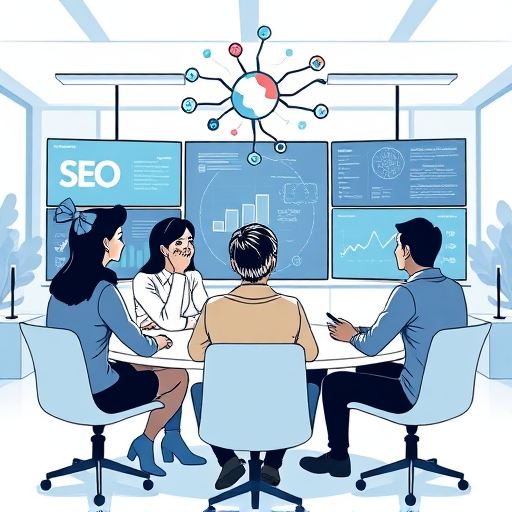
Bringing AI SEO tools into a mature enterprise setup goes beyond mere installation— it requires a deliberate integration blueprint that cultivates harmony between human ingenuity and machine efficiency, aiming for a robust “Human-in-the-loop” paradigm where AI tackles voluminous, repetitive tasks like data parsing and initial audits, liberating SEO pros for high-level strategy, innovation, and nuanced decision-making.
Central to success is masterful change management, addressing team apprehensions through transparent messaging about role evolution, hands-on training sessions tailored to skill levels, and pilot programs showcasing quick wins, such as slashing audit times by 70%. This nurtures a fluid content supply chain, from ideation to optimization, with AI as the accelerator. Adopt a “Visionary Mentor” mindset, positioning AI as a trusty co-pilot: just as a veteran financial analyst relies on sophisticated software to sift through market floods—handling computations while the human delivers foresight and judgment—so too can SEO teams thrive, boosting productivity and sharpening competitive edges in dynamic digital arenas.
Frequently Asked Questions (FAQ)
Is AI-generated content safe for enterprise-level SEO?
Yes, provided you navigate it carefully with key safeguards in place. Google’s guidelines stress creating helpful, reliable, people-first content no matter the source. For enterprises, this means rolling out robust Content Governance, incorporating human oversight and thorough fact-checking to meet elevated E-E-A-T standards. Publishing unchecked AI output can jeopardize rankings and damage your brand’s standing significantly.
How do enterprise AI SEO tools handle data privacy and security?
Top enterprise AI SEO tools place data privacy and security at the forefront via stringent compliance protocols. They conform to benchmarks like SOC 2, ISO 27001, and GDPR, featuring full end-to-end encryption, granular access controls, and ongoing security audits. Before committing, always review the vendor’s certifications and data policies in detail.
Can these tools integrate with Adobe Experience Manager or Sitecore?
Yes, numerous enterprise AI SEO platforms provide adaptable API Integration to link effortlessly with leading CMS and DXP systems like Adobe Experience Manager (AEM) and Sitecore. This setup enables smooth data exchange, in-CMS content tweaks, and consolidated reporting. Double-check exact compatibility details directly with the provider.
What is the typical ROI timeframe when implementing AI SEO platforms?
ROI timelines for AI SEO platforms depend on rollout complexity, team preparedness, and operation size. Typically, you’ll notice early productivity boosts in 3-6 months, followed by substantial organic traffic and revenue lifts in 9-18 months. Establishing a solid ROI Quantification Model with baseline KPIs is key to tracking progress accurately.
How do I prevent “AI Hallucinations” in large-scale content production?
To curb “AI Hallucinations”—fabricated facts or illogical outputs—in high-volume content creation, layer on these defenses:
- Source Verification: Base AI training on premium, vetted datasets.
- Human-in-the-Loop Review: Enforce human checks and refinements for vital content.
- Fact-Checking Tools: Deploy AI-assisted or manual verification systems.
- Clear Prompts: Craft precise, bounded instructions for the AI.
Together, these steps lock in accuracy and uphold your brand’s integrity.
