
30-Second Quick Read: Key Takeaways
- Core Definition: Render operates as a decentralized GPU rendering platform that connects idle GPU computing power from around the world, delivering efficient and affordable 3D rendering and AI computation services to creators. This approach taps into underutilized resources, creating a global network that rivals traditional high-cost alternatives.
- Biggest Advantages: It directly addresses the skyrocketing demand for advanced computing power among creators while slashing hardware expenses, earning it the nickname “the Uber of GPUs.” As a foundational infrastructure for AI and the metaverse, Render positions itself at the heart of emerging tech trends, enabling scalable solutions where centralized options fall short.
- Investment Risks: The market closely watches its ties to the AI sector, but investors should remain cautious of fierce competition in GPU rental spaces from giants like AWS and Google Cloud, as well as technical hurdles during token migrations that could introduce volatility or delays.

What is Render (RENDER)? A 3-Minute Guide to Understanding Its Core Concepts
Render (RENDER) stands out as a groundbreaking decentralized GPU rendering network, fundamentally designed to aggregate unused graphics processing unit (GPU) power from computers worldwide into what feels like a massive “virtual supercomputer.” This innovative setup targets creators, artists, animators, and even AI researchers by offering unprecedented access to high-performance 3D rendering and AI computation services at a fraction of the usual cost. Picture this: your own computer’s graphics card, sitting idle most of the time, could now contribute to others’ projects and earn you rewards in return—this shared economy model lies at the heart of how Render Network transforms everyday hardware into a revenue-generating asset.
To make it relatable through a traditional finance lens translated into crypto terms, think of Render as the “Uber” or “Airbnb” for GPU computing power. It doesn’t own a single physical GPU; instead, it leverages blockchain technology to seamlessly connect “node operators”—individuals or groups with spare GPU resources—to “creators” who require immense computational muscle for intricate tasks. This matchmaking drastically lowers the barriers for creators needing top-tier power, while empowering average users to monetize their home setups, effectively democratizing access to elite computing. In today’s landscape, where AI image generation, metaverse content creation, and film VFX industries are exploding with exponential demand for advanced GPUs, Render Network steps in to fill a critical gap. Why does this matter? Because centralized providers often charge premium prices due to their infrastructure investments, leaving room for a decentralized alternative like Render to disrupt the market. Peering deeper, it’s clear why Render leads the charge in the DePIN (Decentralized Physical Infrastructure Networks) arena, powering the next wave of digital innovation.
Originally, Render Network ran on the Ethereum blockchain with its token RNDR, but to achieve faster transactions and slash fees, the community voted in 2026 to migrate its core infrastructure to Solana, rebranding the token from RNDR to RENDER (SPL). This upgrade wasn’t just a technical tweak—it supercharged the network’s efficiency, paving the way for explosive growth in AI and metaverse applications by handling higher volumes without the bottlenecks of older chains.
How Does Render Network Operate? What Sets It Apart from Bitcoin or Ethereum?
The mechanics powering Render Network diverge sharply from the foundations of Bitcoin or Ethereum, especially in their Proof of Work (PoW) eras. Those networks rely on miners expending vast energy to solve cryptographic puzzles, securing the chain but producing compute power with no direct real-world utility beyond validation. In contrast, Render employs a novel “Proof of Render” system, where the generated compute directly fuels practical 3D rendering and AI tasks for users, creating tangible economic value from every cycle of processing. This shift from abstract security to productive output is why Render feels more like a utility-driven economy than a mere consensus machine.
Node Operators, Creators, and the Role of OctaneRender
At its core, Render’s ecosystem revolves around two primary players, each with defined incentives that keep the network humming.
- Node Operators: These are everyday users or organizations sitting on idle GPUs. By registering on the Render Network and firing up the node software, they offer their hardware to tackle rendering jobs submitted by others. Typically, this requires NVIDIA cards with strong CUDA support and a reliable internet connection to stay online. Once tasks wrap up, operators earn RENDER tokens based on the power they contributed, turning downtime into dollars—quite literally, as payouts reflect real-world service delivery.
- Creators: These folks—ranging from indie artists to studio pros—upload jobs like 3D scene renders, AI model training, or VFX simulations, paying in RENDER tokens upfront. The network’s smart algorithms then dispatch these to the best-suited nodes, optimizing for speed, quality, and cost, so creators get pro-level results without buying their own server farms.
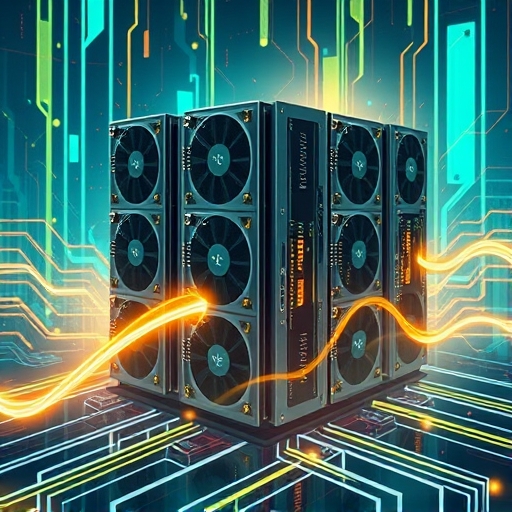
Underpinning it all is OctaneRender, the flagship software from Render’s parent company OTOY, renowned for its unbiased physically-based rendering engine that accelerates via GPUs. Used in blockbusters, games, and designs, it guarantees top-tier output. How does this integration work? OctaneRender runs natively on the nodes, ensuring consistency and speed that centralized farms envy, while blockchain handles the trustless payments and job verification.
Solana’s Speed Edge and the BME Model Explained
Migrating to Solana marked a pivotal evolution for Render, capitalizing on the chain’s blistering throughput—thousands of transactions per second at pennies per pop. For Render, this means instant job assignments and settlements, crucial for high-volume, micro-payment workflows where delays could kill efficiency. Without Solana’s proof-of-history tech enabling parallel processing, Render’s real-time demands would stutter.
Layered on top is the BME (Burn-and-Mint Equilibrium) model, a clever supply balancer. Creators burn RENDER tokens to submit jobs, removing them from circulation and tying demand to usage. Operators then mint fresh tokens upon completion, scaled to network needs. This dynamic isn’t like Bitcoin’s hard-capped issuance or Ethereum’s EIP-1559 burns—it actively equilibrates supply with real activity, curbing inflation during booms and sustaining incentives in lulls, fostering long-term viability.
What Are Render’s Tokenomics? Breaking Down Supply, Allocation, and Inflation Controls
Render (RENDER)’s token economics form the backbone of its decentralized operations, meticulously crafted to motivate participants, nurture network vitality, and safeguard token value over time. Diving into this model reveals how it sustains growth; unlike static schedules, it responds to usage, making it a living system for a compute marketplace.
The Shift from RNDR to RENDER: Seamless 1:1 Migration
Render started with RNDR on Ethereum, but Ethereum’s scaling woes prompted a community-driven pivot. In 2026, after thorough votes, the infrastructure jumped to Solana, swapping RNDR for RENDER at a perfect 1:1 ratio. Holders faced no losses, gaining instead Solana’s zippy confirms and low fees—essential for frequent, small renders—while unlocking smoother integrations in Solana’s thriving DeFi and NFT ecosystems.
Decoding the BME Model: Dynamic Burn-and-Mint Balance
The BME mechanism is Render’s secret sauce for token health, adjusting supply on-the-fly to match demand.
- Burn Phase: Creators pay with RENDER for services, and those tokens vanish forever. This deflationary pressure scales with activity—busier network means more burns—directly countering dilution and rewarding holders as utility rises.
- Mint Phase: Operators get newly minted RENDER post-job, calibrated by hashpower delivered, job difficulty, and global demand. It’s not arbitrary; algorithms ensure fairness, preventing over-minting.
Net effect? Supply hovers in equilibrium: high demand shrinks it for scarcity, low demand mints just enough to lure providers. This beats fixed models by aligning economics with reality, potentially boosting value as adoption surges.
Token Allocation and Versatile Uses
RENDER multitasks brilliantly:
- Payment Utility: Fuels all service fees, creating organic demand.
- Incentive Driver: Rewards operators, scaling with contributions.
- Governance Power: Lets holders vote on upgrades, ensuring community steering.
This holistic design, fused with BME, births a self-sustaining market, outpacing centralized clouds by slashing costs through idle resource pooling and proving blockchain’s prowess in real apps.
What Is the History and Evolution of Render Network?
Render Network’s journey stems from a profound grasp of visual arts and compute tech, tracing back to OTOY, founded by VFX pioneer Jules Urbach. OTOY’s decades in 3D graphics and cloud rendering, with OctaneRender as a Hollywood staple, birthed the idea in 2017 to decentralize GPU sharing via blockchain—unlocking global idle power for all.
2017 ICO: Launching the Decentralized Rendering Vision
In 2017’s ICO boom, Render raised funds to build its platform. DePIN was nascent, but Urbach foresaw blockchain coordinating dispersed GPUs, tokenizing incentives to upend centralized monopolies. Though skepticism lingered, it planted seeds for affordable, scalable rendering amid rising content demands.
2020 Mainnet Launch: From Idea to Live Operations
After rigorous testing, 2020’s mainnet debut operationalized the vision. Nodes went live, creators submitted jobs, Ethereum contracts managed flows—proving decentralized compute could rival pros, with early adopters validating the model.
2026 Milestone: Solana Migration and RENDER Token Upgrade
2026 redefined Render: Ethereum congestion spurred a community vote for Solana, renaming to RENDER (SPL). This slashed costs, boosted speed for AI/real-time needs, and aligned with metaverse surges. Partnerships with tech titans via OTOY amplified reach, cementing Render as DePIN royalty—from spark to infrastructure powerhouse.
What Are Render’s Strengths and Weaknesses? A Full Risk Assessment Before Investing
Render (RENDER) carves a niche in decentralized GPU/AI compute, drawing eyes in crypto circles. Yet smart investing demands dissecting pros and cons amid volatility.
Render’s Key Strengths
1. DePIN Leader and AI Boom Rider: Exemplifying DePIN, Render fuses blockchain with physical needs. AI’s GPU hunger explodes; Render supplies cheap, distributed power—the “shovel seller” for training/rendering, primed for metaverse/AI synergy.
2. Rock-Solid Tech and Industry Pedigree: OTOY’s legacy and Urbach’s vision provide unmatched cred. OctaneRender’s acclaim ensures quality, partnerships potential with Nvidia/Apple fuel expansion.
3. Cost Savings and High Efficiency: Beats AWS et al. by 50-90% via idle pooling; Solana zips tasks, cutting wait times dramatically.
4. Expansive Partnerships and Ecosystem: Ties to giants promise user influx, standardizing tech for broader adoption.
Render’s Drawbacks and Risks
1. Cutthroat Competition: Cloud behemoths and rivals like Akash vie aggressively; Render must innovate relentlessly.
2. Solana Dependency: Speed gains tie fate to Solana’s uptime—outages could cascade.
3. Extreme Price Swings: Crypto norms amplify volatility from sentiment/macros.
4. Tech Barriers and Onboarding: Node setup daunts newbies; education key to mass appeal.
5. Regulatory Clouds: Evolving rules could crimp ops globally.
Render gleams in AI/metaverse tailwinds, but DYOR and diversify to navigate risks.
How Can You Mine or Stake Render for Passive Income? Step-by-Step Guide
Unlike Bitcoin’s energy-hungry PoW mining, Render rewards real GPU service—no puzzles, just utility. Passive income paths abound for varied skill levels.
1. Become a Node Operator (Supply GPU Power)
Ideal for hardware owners: RTX NVIDIA rigs shine here.
Step-by-Step Setup:
- Hardware Check: Confirm CUDA-compatible NVIDIA GPU.
- Software Install: Grab official node app from Render site.
- Register & Connect: Link Solana wallet, join network.
- Go Live: Accept jobs, earn RENDER on completion—yields vary by demand/power.
Caveats: Demands uptime/tech savvy; rewards fluctuate.
2. Stake on Centralized Exchanges
Hands-off for novices.
Steps:
- Pick Platform: Binance/Coinbase if offering RENDER staking.
- Deposit: Transfer tokens.
- Stake: Choose terms, earn APY.
Risks: Custodial perils, variable yields/locks.
3. Provide Liquidity on DEXes
DeFi pros: Add to pools on Raydium/Orca.
Steps:
- Select Pool: RENDER/SOL etc.
- Pair Tokens: Equal values.
- Add Liquidity: Get LP tokens, farm fees.
Risks: Impermanent loss from price drifts.
Assess risks; crypto’s wild—proceed wisely.
What Does the Future Hold for Render? Upcoming Upgrades and Challenges
Render pioneers decentralized GPU/AI compute amid AI/metaverse booms, demand soaring. Yet scaling demands ingenuity.
Key Upgrades and Hype
1. AI Task Expansion: Beyond renders to LLM training/inference—optimizing for massive datasets.
2. Spatial Computing Tie-Ins: Vision Pro era amps 3D needs; Urbach’s Apple links position Render centrally.
3. Hollywood Deep Dive: OctaneRender scales VFX affordably for studios.
4. Scalability Boosts: Smarter scheduling, chain hybrids for ultra-low latency.
5. Governance Evolution: Token holders shape destiny, refined incentives grow ecosystem.
looming Challenges
1. Rivals: Clouds/DePIN foes demand edge-proofing.
2. Stability: Solana tweaks needed for volume spikes.
3. Adoption: Frictionless UX to convert traditionalists.
Overcome these, and Render redefines compute—democratized, efficient.
Frequently Asked Questions (FAQ)
Will Render token reach $100?
Predicting cryptocurrency prices is highly challenging and uncertain. Whether Render (RENDER) hits $100 depends on factors like overall crypto bull/bear cycles, progress in DePIN and AI sectors, Render Network’s tech advancements, partnerships, adoption rates, and macroeconomics. While Render boasts strong potential, many tokens have peaked and crashed historically. Treat predictions as speculative; research thoroughly and grasp crypto’s volatility.
What’s the difference between RNDR and RENDER? Do I need to swap?
RNDR was Render Network’s old Ethereum token; RENDER is the new Solana version post-migration. They represent the same project/value. If holding RNDR, use official bridges or exchange services to swap 1:1 for RENDER. This unlocks Solana perks like lower fees/speed and governance. Always official channels to dodge scams.
Is Render token worth investing in?
As DePIN/AI compute leader, Render tackles booming GPU needs—a massive market. Long-term, AI/metaverse drives demand. But high risks lurk: sentiment, competition, tech, regs fuel swings. DYOR on tech/team/market/risks; DCA, diversify per tolerance—never all-in one asset.
How do I participate in Render mining?
Unlike Bitcoin puzzle-solving, Render rewards GPU tasks as a “node operator.” Requirements:
- High-end NVIDIA GPU (RTX recommended).
- Stable internet.
- Download/install official node software.
- Register/connect node.
Complete creator jobs for RENDER rewards—true utility mining.
