
30-Second Quick Read: Key Takeaways
- Core Definition: Algorand is a decentralized Layer 1 public blockchain developed by Turing Award winner Professor Silvio Micali. It leverages its innovative Pure Proof of Stake (PPoS) mechanism to completely address the blockchain trilemma, balancing decentralization, security, and scalability in ways that traditional systems struggle to achieve.
- Key Advantages: Algorand delivers instant finality with no forks ever, and incredibly low transaction costs around 0.001 ALGO, making it ideal for institutional-grade financial applications and real-world asset tokenization (RWA), where reliability and efficiency are paramount.
- Investment Risks: While boasting top-tier technology and eco-friendliness, Algorand competes against heavyweights like Ethereum and Solana. Early token distribution was somewhat concentrated, so the market watches closely for the pace of its ecosystem growth and adoption.
What is Algorand (ALGO)? A 3-Minute Guide to Understanding Its Core Concepts
Algorand (ALGO)—check out more on ALGO—stands as a groundbreaking decentralized Layer 1 public blockchain launched in June 2019 after its founding in 2017 by Silvio Micali, the renowned MIT professor and Turing Award recipient. This platform was meticulously engineered to deliver top-notch performance in speed, security, and scalability, serving as a robust foundation for Web3 applications, decentralized finance (DeFi), and the tokenization of real-world assets (RWA). At its heart lies a bold mission: to conquer the infamous blockchain trilemma—the challenging trade-offs between decentralization, security, and scalability—through its proprietary Pure Proof of Stake (PPoS) consensus mechanism. Why does this matter? The trilemma has long plagued blockchain developers, forcing compromises that limit real-world adoption, but Algorand’s approach aims to eliminate those constraints entirely, enabling seamless, high-volume operations without sacrificing core principles.
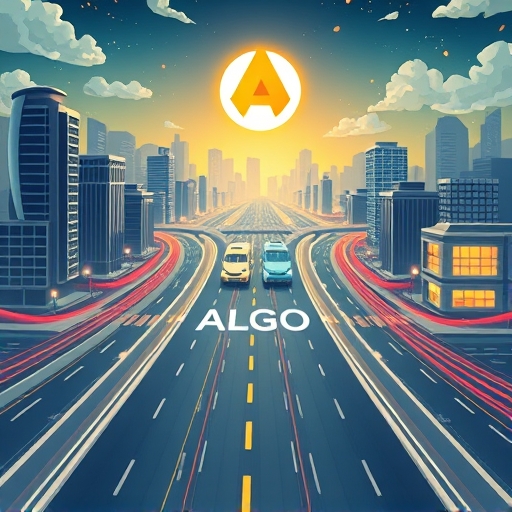
Picture Algorand as a state-of-the-art national financial superhighway, crafted by elite scholars to handle the demands of a digital economy. It features cutting-edge security protocols that safeguard every transaction against threats, processes massive transaction volumes at lightning speed, and keeps fees remarkably low to encourage widespread use. This unique combination sets Algorand apart in a crowded field, shining brightest in enterprise scenarios where stability, efficiency, and transparency are non-negotiable. For instance, back in 2021, it achieved carbon neutrality, branding itself as a green blockchain committed to sustainability amid growing environmental concerns. Then, in 2022, it partnered officially with the FIFA World Cup, demonstrating its prowess in high-stakes, global applications and blending technical excellence with real-world social impact.
Far beyond a simple transaction ledger, Algorand functions as a full-fledged smart contract platform, empowering developers to build diverse decentralized applications (dApps) with confidence. Its philosophy centers on “instant finality,” ensuring that once a transaction is confirmed, it’s irrevocably settled—no reversals or forks possible. This is a game-changer for financial institutions, which demand certainty in settlements. Translating this into familiar terms, think of Algorand as a global payment network with real-time clearing like instant bank transfers: once processed, the deal is done, fostering unparalleled trust in digital asset flows and value exchanges across borders and industries.
How Does Algorand Work? What Sets It Apart from Bitcoin and Ethereum?
The engine powering Algorand revolves around its pioneering Pure Proof of Stake (PPoS) consensus algorithm, a stark departure from Bitcoin’s energy-intensive Proof of Work (PoW) and Ethereum’s Delegated Proof of Stake (DPoS) or Beacon Chain PoS implementations. PPoS is crafted to deliver genuine decentralization, ironclad security, and superior scalability while sidestepping PoW’s massive energy demands and the centralization pitfalls of many PoS systems. This design isn’t just theoretical; it’s battle-tested to handle real-world demands without compromising on any front.
What is Pure Proof of Stake (PPoS) and Verifiable Random Functions (VRF)?
Under Algorand’s PPoS, every ALGO holder qualifies as a potential participant, with a fair shot at being randomly chosen to propose or validate blocks. The “pure” aspect shines through in its lottery-like selection process, which is entirely random and equitable—no need to delegate tokens to third parties, slashing centralization risks that plague other PoS networks. Central to this is the Verifiable Random Function (VRF), a cryptographic marvel akin to a tamper-proof digital lottery machine. For each block, VRF secretly and unpredictably picks a small group to propose the block and another to vote on it. Crucially, anyone can verify the randomness and fairness post-selection without predicting outcomes beforehand, fortifying the network against attacks like collusion or manipulation that could otherwise undermine trust.
How Do Instant Finality and the Two-Tiered Network Architecture Function?
Another standout feature is instant finality, where blocks added to the chain are permanently settled upon validation—no rollbacks or forks ever. Unlike PoW chains like Bitcoin, where transactions await multiple confirmations amid probabilistic finality, Algorand locks in certainty immediately, which is vital for time-sensitive financial operations demanding unshakeable trust. To power this efficiency, Algorand employs a two-tiered structure: Layer 1 handles core transactions, smart contract execution, and consensus for rock-solid basics, while Layer 2 tackles advanced dApps via state channels and atomic swaps. This setup boosts scalability and cuts costs further without destabilizing the foundation, allowing the network to scale gracefully as adoption grows.
How Does Algorand Compare to Bitcoin and Ethereum?
Against Bitcoin, Algorand obliterates PoW’s drawbacks: Bitcoin’s 10-minute block times and mere 7 TPS pale next to Algorand’s 10,000+ TPS and seconds-to-finality. This shift enables high-throughput apps that Bitcoin simply can’t support. Versus Ethereum—especially post-2.0 PoS upgrade—Algorand’s PPoS edges out in pure decentralization; Ethereum’s staking pools risk validator concentration, but Algorand’s per-block random selection prevents any entity from dominating long-term. Peering through this lens reveals Algorand’s trailblazing path: a secure, efficient alternative reshaping blockchain’s potential for mass adoption.
What are ALGO Tokenomics? Breaking Down Supply, Allocation, and Inflation Mechanics
ALGO, the native token of the Algorand blockchain, features tokenomics designed to incentivize participation, secure the network, and fuel long-term ecosystem growth. Like Bitcoin’s scarcity model, it caps total supply rigidly, but its release schedule is nuanced to sustain operations and engage the community actively, preventing sudden floods while rewarding contributions over time.
What is the Fixed Total Supply and Release Schedule?
Capped at 10 billion tokens, ALGO ensures no new minting beyond this limit, curbing inflation risks that erode value in unbounded systems. These aren’t dumped all at once; a phased vesting plan rolls them out gradually, targeting full circulation around 2030. This controlled approach mitigates short-term sell pressure, stabilizes markets, and keeps incentives flowing to early adopters and ongoing network supporters, fostering sustainable expansion.
How is the Token Allocation Structured?
The 10 billion ALGO supply splits strategically across categories to nurture various ecosystem pillars:
- 3 billion tokens: Distributed via ICO and early sales, providing seed capital to kickstart Algorand’s development and operations.
- 1.75 billion tokens: Dedicated to participation rewards, disbursed directly to ALGO holders who stake and help secure the network, promoting retention and decentralization.
- 2.5 billion tokens: Allocated for relay node rewards; these nodes broadcast blocks and transactions network-wide, ensuring reliability—rewards motivate operators to maintain high-performance infrastructure.
- 2.5 billion tokens: Reserved for the Algorand Foundation and founding team, funding R&D, marketing, partnerships, and growth initiatives to propel innovation.
This balanced distribution harmonizes interests among investors, validators, and builders, driving collective momentum for Algorand’s ascent.
What Drives the Inflation Mechanism and Governance Rewards?
Though fixed-supply, gradual releases via ecosystem, node, and governance rewards create a managed “inflation” to compensate participants. Since the 2021 Community Governance program, holders lock ALGO for three months, vote on proposals—from protocol tweaks to funding—and earn boosted rewards. This ties holding to influence, mirroring shareholder voting and dividends in traditional finance: lock in, decide the roadmap, reap higher yields. Ultimately, these tokenomics cultivate a self-sustaining, engaged, decentralized community.

What is the History and Evolution of Algorand?
Algorand’s origins trace back to its founder’s academic brilliance, evolving into a saga of transforming cutting-edge cryptography into practical reality. More than tech, it’s a visionary endeavor led by scientific pioneers to underpin the global digital economy with unbreakable foundations.
What Vision Drove Turing Award Winner Silvio Micali to Create Algorand?
Silvio Micali, Algorand’s founder, is a cryptography legend and MIT professor who snagged the 2012 Turing Award for breakthroughs in zero-knowledge proofs and secure multi-party computation—bedrocks of modern blockchain security. Witnessing Bitcoin and Ethereum’s limitations in the trilemma, he envisioned a protocol mastering all three pillars. In 2017, he founded Algorand Inc., assembling top researchers and engineers to realize PPoS in code.
What Are the Key Milestones and Technical Breakthroughs?
Pivotal moments chart Algorand’s rise:
- 2017: Silvio Micali launches Algorand, bridging PPoS from theory to prototype.
- 2019 June: Mainnet goes live, proving PPoS stability as users build and trade at scale with speed and low costs.
- 2021: Hits carbon neutrality, pioneering ESG in blockchain and appealing to sustainability-focused markets as a “green” leader.
- 2022: Official FIFA World Cup blockchain partner, boosting visibility and validating high-concurrency prowess.
- 2026: Debuts the first regulated tokenized money market fund, advancing RWA with compliant, efficient on-chain finance for institutions.
These landmarks affirm Algorand’s reliability and edge in a fierce arena, unveiling a scholar-led project relentlessly innovating.
What Are Algorand’s Strengths and Weaknesses? A Comprehensive Analysis for Investors
Scrutinizing any crypto requires weighing pros against risks. Algorand, scholar-forged Layer 1, excels technically but navigates competition and growth hurdles—like vetting a tech startup’s IP against market traction.
What Are Algorand’s Primary Strengths?
- Supreme Speed and Scalability: PPoS and two-tier design yield 10,000+ TPS with instant finality in seconds, outpacing Bitcoin/Ethereum for high-frequency finance.
- Ultra-Low Fees: ~0.001 ALGO per tx enables micropayments, slashing barriers for users/devs versus gas-guzzling rivals.
- Carbon Neutral and Eco-Friendly: PPoS slashes energy use; 2021 neutrality cements green status amid ESG mandates.
- Robust Security and Uptime: Micali-designed, academically vetted PPoS boasts zero downtime, magnetizing stability-craving institutions.
- Elite Academic and Institutional Ties: FIFA partnerships, CBDC pilots with banks/governments back long-term viability.
What Are Algorand’s Key Weaknesses and Risks?
- Lagging dApp Ecosystem: Tech superior, but dApps trail Ethereum/Solana/BNB in quantity/activity, hindering developer draw.
- Early Token Sell Pressure: Concentrated founder/early holdings risk dumps despite vesting, pressuring price.
- Relay Node Barriers: High hardware/bandwidth needs limit participation, potentially curbing decentralization.
- Fierce Competition: Ethereum 2.0, Solana, Avalanche challenge dominance; market share battles loom.
- Community Engagement: Needs vibrant communities like rivals for hype, devs, growth.
Algorand packs tech punch and vision, but savvy investors balance against competition/ecosystem risks.
How Can You Participate in the Algorand Ecosystem? Staking and Governance Guide
Unlike PoW mining, Algorand’s PPoS invites easy engagement via staking/governance for yields and influence—no rigs required.
How Does ALGO Staking Work for Easy Rewards?
Hold ALGO in wallets like Pera (ex-Algorand Wallet) or exchanges; auto-earn participation rewards as your stake randomly proposes/validates. No delegation hassle—your holdings = rights. Like effortless bank interest, it lowers barriers, empowering all to bolster security/decentralization with passive income.
How Does Community Governance Offer Deeper Involvement and Higher Rewards?
Launched 2021, governance lets holders lock ALGO (3 months/cycle), vote proposals (params, funding, upgrades), earn premium rewards. Steps:
- Register: Commit ALGO via Pera pre-cycle.
- Lock: Pledge immobility for duration.
- Vote: Platform polls on proposals.
- Earn: Compliant voters get boosted payouts post-cycle.
Beyond yields, it grants shareholder-like sway. Ideal for committed users shaping Algorand’s path.
What Does the Future Hold for Algorand? Upcoming Upgrades and Challenges
Algorand’s proven tech eyes cross-chain, RWA, gov ties amid crypto flux—roadmap spotlights interoperability, tokenization, partnerships.
How Will State Proofs Enable Cross-Chain Interoperability?
Battling silos, State Proofs let light clients verify foreign chains sans full data—trustless bridges for Ethereum/Bitcoin assets. Like decentralized SWIFT, it unlocks liquidity/Web3 unity.
How Are RWA Tokenization and CBDC Partnerships Progressing?
Tailored for institutions: low fees/speed/finality/green creds suit assets/CBDCs.
- RWA Advances: 2026’s regulated fund pioneers compliant finance, eyeing real estate/art for liquidity.
- CBDC Ties: Marshall Islands collab showcases secure scalability/privacy.
Bridges crypto to TradFi, boosting efficiency/transparency.
What Ecosystem Growth and Market Hurdles Lie Ahead?
- Dev Community: Lure builders for dApp boom.
- Competition: Outpace Ethereum/Solana in share.
- Regulation: Innovate compliantly in RWA/CBDC.
Potential abounds in tech/finance focus.
Frequently Asked Questions (FAQ)
Can you mine ALGO coins?
No. ALGO uses Pure Proof of Stake (PPoS), entirely different from Bitcoin’s Proof of Work (PoW). No expensive mining rigs needed. Just hold ALGO in a supported wallet to automatically earn participation rewards, or join community governance for even higher yields.
Does Algorand truly solve the blockchain trilemma?
Algorand targets the trilemma—decentralization, security, scalability—via PPoS and Verifiable Random Functions (VRF) for random node selection, ensuring fairness and safety. Its fast consensus and instant finality deliver high TPS. While “complete solution” debates persist academically, it achieves exceptional balance for scalable dApps.
Is ALGO worth investing in? Could it reach $10?
ALGO boasts strong tech, carbon neutrality, RWA potential, FIFA ties, and CBDC explorations for bright prospects. Yet crypto volatility, competition, and early allocation risks loom. DYOR, assess risk tolerance—no price predictions or advice here.
What differentiates Algorand from Ethereum?
Key differences:
- Consensus: PPoS (random, pure) vs. Ethereum’s Beacon PoS.
- Speed/Cost: 10,000+ TPS, ~0.001 ALGO vs. Ethereum’s prior highs.
- Finality: Instant vs. multi-block waits.
- Eco: Carbon neutral vs. PoS-reduced but less explicit.
Algorand prioritizes efficient, low-cost, secure platforms for finance/scalability.
