
30-Second Quick Read: Key Takeaways on Internet Computer (ICP)
- Core Definition: ICP seeks to transform the internet into a “world computer,” enabling code to run directly on the web without relying on traditional centralized cloud providers. It’s a decentralized blockchain network developed by the DFINITY Foundation, designed to host full-stack applications in a permissionless environment.
- Key Advantages and Use Cases: ICP features a revolutionary “reverse gas model” where users don’t pay transaction fees—developers cover costs instead. This allows for internet-native speeds in data processing, making it perfect for massive Web3 applications and on-chain AI computations that demand high performance and scalability.
- Investment Risks and Current Status: While ICP boasts cutting-edge technology and strong AI potential, its early price volatility created divided opinions in the community. Today, the market is watching closely to see if ICP can successfully draw developers away from centralized clouds toward its decentralized architecture, proving its real-world viability.
What Is Internet Computer (ICP)? A 3-Minute Guide to Its Core Concepts
Internet Computer (ICP) stands out as a groundbreaking decentralized blockchain network crafted by the DFINITY Foundation. At its heart lies an ambitious vision: to evolve the entire internet into a single, unified “world computer.” This revolutionary idea means developers can build, deploy, and run full-fledged applications, websites, and even enterprise systems directly on the ICP network itself. Why does this matter? In today’s Web2 landscape, most online services depend heavily on centralized giants like Amazon Web Services (AWS), Google Cloud, or Microsoft Azure, which control vast amounts of user data and infrastructure. ICP flips this script by eliminating that dependency, fostering a truly open ecosystem.
Think of it in familiar terms from traditional finance reimagined for crypto: Internet Computer (ICP) operates like a globally shared “decentralized cloud” infrastructure. But it’s not just another blockchain—it’s positioned as a “third-generation public chain” that dismantles the typical IT stack. Components like databases, firewalls, and content delivery networks (CDNs) that plague traditional setups? ICP integrates all computation and data storage straight into a single, open, permissionless blockchain. This approach tackles Web2’s core issues—centralization, privacy breaches, and censorship—by delivering superior security, user privacy, and resistance to censorship. Plus, it slashes development and maintenance costs dramatically, empowering creators worldwide.
The philosophy driving ICP is straightforward yet profound: software should run at the raw speed of the internet, without blockchain bottlenecks. A standout feature is its “reverse gas model,” which redefines how fees work. Unlike most blockchains where users foot the bill for every transaction or smart contract execution via gas fees, ICP shifts that burden to developers. Users enjoy seamless interactions, much like surfing the regular web. This lowers barriers to entry tremendously, positioning ICP as the go-to platform for Web3 apps and decentralized AI (DeAI) operations. Imagine running sophisticated AI models entirely on-chain at scale—ICP makes that feasible with blazing efficiency.
How Does ICP Work? What Makes It Different from Bitcoin and Ethereum?
The operational mechanics of Internet Computer (ICP) diverge sharply from pioneers like Bitcoin or Ethereum, primarily through its innovative architecture and underlying tech stack. Rather than relying on a single, linear blockchain, ICP builds a dynamic network of multiple “subnets” (subnetworks). Each subnet functions as an independent blockchain, processing transactions in parallel. This design unlocks virtually limitless scalability—adding more subnets linearly boosts capacity without compromising speed or security, addressing a pain point that has long plagued other chains.
What Are Canisters? ICP’s Powerful Smart Contracts
At the core of ICP’s computing power are “Canisters,” which you can think of as supercharged smart contracts running across the network. Why are they superior? Traditional smart contracts on platforms like Ethereum are limited to basic logic and storage; Canisters go further by not only storing data and executing code but also serving web content directly. They power complete Web3 dApps, from front-end interfaces to back-end logic. Canisters communicate seamlessly with each other and leverage WebAssembly (WASM) as their runtime environment. This flexibility lets developers code in popular languages like Rust or Motoko, drastically reducing the learning curve and broadening accessibility for builders transitioning from Web2.
Chain Key Cryptography: Enabling Lightning-Fast Speeds and Cross-Chain Magic
Another game-changer is “Chain Key Technology,” ICP’s cryptographic innovation that binds the entire network under a single public key. How does it work? Every node verifies transactions or Canister states from any subnet effortlessly, slashing confirmation times to sub-second levels—far quicker than most blockchains. This shared key also facilitates native integrations with chains like Bitcoin, bypassing clunky bridges or custodians. No more wrapped tokens or trust assumptions; it’s direct, secure, and efficient, paving the way for fluid interoperability in the multi-chain future.
NNS (Network Nervous System): The Intelligent Brain Governing ICP
Overseeing ICP’s governance and operations is the “Network Nervous System” (NNS), a fully on-chain DAO powered by ICP token holders. Users stake their tokens as “Neurons” to gain voting power, collectively deciding on protocol upgrades, subnet additions, node provider management, and token economics tweaks. This setup ensures decentralized evolution—decisions emerge from community consensus, not a central authority—making the network resilient to censorship and adaptable to growth.
How Does ICP Compare to Bitcoin and Ethereum?
Bitcoin relies on Proof-of-Work (PoW) for security through energy-intensive mining, while Ethereum uses Proof-of-Stake (PoS) post-Merge. ICP employs a unique “Threshold Relay” consensus, blending cryptographic randomness for fairness and robustness. This yields decentralization without Bitcoin’s slow speeds or Ethereum’s high fees. Storing 1GB of data on ICP costs a fraction of Ethereum’s, with throughput enabling enterprise-scale Web3 apps. The reverse gas model seals the deal—users transact fee-free, contrasting Ethereum’s per-action charges, for a web-like user experience that drives mass adoption.
What Are ICP’s Tokenomics? Exploring Supply, Allocation, and Inflation Mechanics
Internet Computer (ICP)’s tokenomics are meticulously engineered to incentivize participation, secure the network, and fuel long-term growth. The ICP token serves multiple vital roles, balanced by a dynamic inflation-deflation system that ties value to real utility and usage.
The Three Core Utilities of the ICP Token
ICP tokens power the ecosystem in three primary ways:
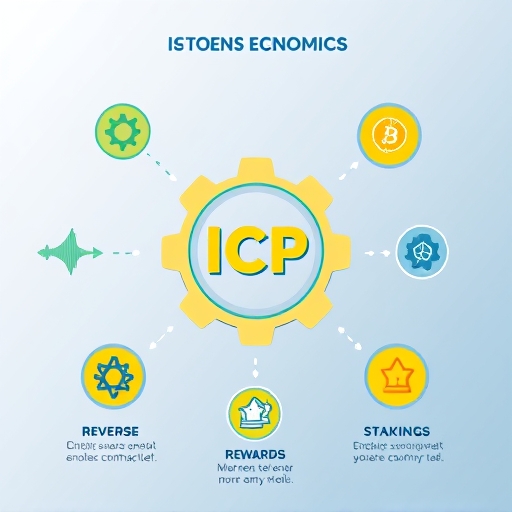
- Converting to Cycles for Computation Fees: Here’s the genius twist—users don’t pay ICP directly for transactions. Instead, ICP is “burned” to mint “Cycles,” a stable unit akin to cloud credits. These fund Canister operations like compute cycles, storage, and bandwidth. Why revolutionary? This burn-mint process creates genuine demand through consumption, countering inflation by destroying tokens as network activity surges, directly linking token value to ecosystem health.
- Staking for NNS Governance Rewards: Holders stake ICP into the NNS as Neurons, earning voting rights for decisions like protocol upgrades or parameter changes. Longer lockups amplify voting weight and rewards, turning governance into a lucrative passive income stream. This aligns incentives, ensuring stakers prioritize network prosperity.
- Value Storage and Medium of Exchange: As ICP’s ecosystem expands with more dApps and users, the token acts as the network’s reserve asset, capturing value from adoption and transmitting it seamlessly across the platform.
Supply Dynamics and Inflation Mechanisms
Unlike fixed-supply tokens, ICP has no hard cap, allowing supply to flex with demand. Initial inflation starts at 10%, tapering to a steady 5% annually, minting new ICP to reward NNS stakers and node providers. But it’s not one-way—converting ICP to Cycles burns existing supply. High app usage means more Cycles burned, more ICP destroyed. In thriving scenarios, burns outpace mints, potentially leading to deflation. This equilibrium promotes holding, utility-driven demand, and sustainable funding for development.
What Is the Origin and Development History of ICP?
The roots of Internet Computer (ICP) trace back to 2016, when the Swiss non-profit DFINITY Foundation was founded by a team of cryptographers, distributed systems experts, and researchers. Their bold mission? To redefine internet architecture via a public blockchain capable of hosting the entire web’s compute needs.
Founders and Early Milestones
Dominic Williams, a renowned cryptographer with deep blockchain expertise, leads the charge. From inception, DFINITY targeted scalability, security, and usability flaws in existing chains, aiming for a “world computer” for all Web3 apps. Between 2017 and 2018, they raised over $100 million from top VCs like Andreessen Horowitz (a16z) and Polychain Capital. These funds fueled breakthroughs in Chain Key tech, NNS, and Canisters, validating the vision early on.
Genesis Mainnet Launch and Initial Controversies
On May 10, 2021, ICP’s Genesis mainnet went live, releasing ICP tokens publicly. Prices skyrocketed to hundreds of dollars, vaulting it into the crypto top 10 by market cap. Yet, a sharp crash followed amid accusations of early investor dumps, sparking debates on valuation and unlocks. This volatility polarized the community—skeptics questioned tech maturity, while believers eyed its disruptive potential.
Key Technical Milestones and Roadmap
Undeterred, DFINITY pushed forward. Highlights include:
- 2026: Bitcoin Native Integration (CKBTC): Direct Bitcoin handling on ICP without bridges or wrappers, dubbed Chain-Key Bitcoin (CKBTC). This unlocks DeFi for BTC, expanding use cases massively.
- 2026 Onward: DeAI and Chain Fusion: The roadmap spotlights decentralized AI (DeAI) for on-chain models ensuring transparency and sovereignty, plus Chain Fusion to glue all chains together natively, cementing ICP as Web3’s base layer.
ICP’s journey blends innovation with hurdles, mirroring crypto’s tech-market dance. Peering into it reveals how ICP evolves toward internet transformation.
What Are the Pros and Cons of ICP? Essential Risk Analysis Before Investing
Internet Computer (ICP) pushes boundaries with tech innovations, but no project is flawless. Weighing strengths against risks is crucial for informed investment.
Key Strengths of ICP
-
Unlimited Scalability and Blazing Performance
Subnets enable theoretical infinite scaling—add more for linear capacity growth. Sub-second finality outpaces Bitcoin and Ethereum, supporting massive Web3 apps, social platforms, or enterprise tools that others can’t handle.
-
Native Bitcoin Integration and Cross-Chain Prowess
CKBTC brings seamless Bitcoin to ICP sans intermediaries, slashing risks and enriching DeFi. Chain Fusion promises trustless links to all chains, fostering interoperability.
-
On-Chain AI Support (DeAI) and Reverse Gas Model
Few chains run complex AI on-chain like ICP, ideal for DeAI. Reverse gas frees users from fees, boosting adoption by mimicking web ease.
-
Fully On-Chain Operations: Open and Censorship-Resistant
Entire stacks—front-end to database—live on-chain, maximizing decentralization, security, and transparency versus hybrid setups.
Major Drawbacks and Risks of ICP
-
High Node Hardware Barriers and Centralization Concerns
Enterprise-grade hardware for nodes limits operators; NNS approvals add gates, raising decentralization debates despite DAO governance.
-
Early Investor Sell-Off Pressures and Market Backlash
Post-launch dumps eroded trust; future unlocks could recur, tainting reputation.
-
Developer Ecosystem and Adoption Hurdles
Complex tools and nascent dApps slow migration from mature platforms; proving superiority is key.
-
Technical Complexity and Learning Curve
Concepts like Canisters and Chain Key demand study, potentially stunting broad uptake.
ICP shines in vision for decentralized cloud and AI, but node costs, past drama, and ecosystem buildout warrant caution.
How Can You Mine or Stake ICP? Complete Passive Income Tutorial
ICP skips PoW mining—no ASICs here. Security stems from Threshold Relay and NNS. Passive income shines via staking in NNS.
Staking ICP for Rewards: Creating Neurons
Staking spawns “Neurons” for governance and yields. Steps:
-
Acquire ICP Tokens
Buy on exchanges like Binance, Coinbase, OKX.
-
Create and Lock Neurons
Transfer to NNS app (nns.ic0.app). Set dissolve delay (up to 8 years for max rewards) and state—avoid dissolving for peak voting/yields.
-
Vote on Proposals
Engage manually or follow trusted Neurons for upgrades, params, nodes.
-
Claim Rewards
New ICP accrues based on stake, lock, activity—re-stake for compounding.
Becoming a Node Provider
High-barrier: pro hardware, NNS approval, ops expertise. Staking suits most for yields and impact.
What Lies Ahead for ICP? Tech Upgrades and Hurdles on the Horizon
ICP’s roadmap centers on DeAI and Chain Fusion, solidifying Web3 infrastructure amid challenges.
DeAI: Pioneering Decentralized AI
2026 marks DeAI’s breakout: on-chain models for verifiable, censorship-proof AI with incentives.
- Transparency: Open data/weights.
- Resistance: No single control.
- Ecosystem: Token rewards for contributors.
Challenges: Compute efficiency, dev migration.
Chain Fusion: The Glue for All Blockchains
Native interop via Chain Key: read/write chains directly.
- Seamless: No bridges.
- Growth: Liquidity aggregation.
- Unity: One Web3 experience.
Challenges: Complexity, security.
Other Catalysts
- Killer dApps.
- Enterprise shifts.
- NNS maturity.
Success hinges on execution, adoption—watch closely.
Frequently Asked Questions (FAQ)
Is ICP Token Worth Investing In? Can It Reach $100 in the Future?
Whether ICP token is worth investing depends on your risk tolerance and belief in its tech vision. ICP holds potential moats in decentralized cloud and AI, with its reverse gas model and on-chain AI as unique edges. However, early price swings, node centralization concerns, and developer ecosystem growth remain hurdles.
As for hitting $100, that’s highly speculative—no guarantees. ICP’s all-time high exceeded this, but future depends on crypto bull markets, dApp success, DeAI adoption, and deflation mechanics offsetting inflation. DYOR and invest cautiously.
What Is the Competitive Relationship Between ICP and Ethereum?
ICP and Ethereum are both public chains but target different niches—more complementary than rivals. Ethereum excels in asset settlement and DeFi with compact contracts. ICP focuses on massive compute, full Web3 hosting, and on-chain AI, challenging cloud providers.
Chain Fusion could enable deep native integration: ICP as Ethereum’s fast compute layer, Ethereum supplying liquidity.
Why Is ICP Called the “World Computer”?
ICP earns the “world computer” moniker by offering a global, open, permissionless compute platform. Devs build/run any software on-chain—from sites to AI—bypassing AWS, Google Cloud, Azure.
Unlike single-owner servers, ICP’s thousands of nodes form a decentralized “computer,” ensuring censorship resistance, immutability, security.
How Are ICP Staking Rewards Calculated?
ICP staking rewards factor in:
- Stake Amount: Larger stakes yield more base rewards.
- Dissolve Delay: Longer locks (up to 8 years) boost voting weight and multipliers.
- Voting Activity: Active or following Neurons ensures rewards.
- Network Inflation: Starts at 10%, drops to 5%.
NNS dynamically allocates based on these; long locks + activity maximize APY.
