
30-Second Quick Read: Key Takeaways
- Blockchain in the AI Era: NEAR stands out not just as a high-performance Layer 1 blockchain, but as the essential infrastructure powering AI agents and decentralized applications. It champions chain abstraction and the vision of user-owned AI, making advanced tech accessible to everyday people by simplifying interactions across chains.
- Unique Technical Edges: By leveraging its innovative Nightshade sharding technology, NEAR overcomes traditional scalability hurdles, enabling linear growth in capacity as demand rises. It also introduces human-readable accounts and chain abstraction, slashing the complexity of blockchain use and allowing seamless, frictionless management of multi-chain assets without users even noticing the underlying switches.
- Challenges and Opportunities Ahead: With cutting-edge tech and bold moves into the AI space, NEAR leads the pack, yet it navigates a fiercely competitive Layer 1 landscape. The real market spotlight will shine on how effectively it delivers its user-owned AI vision, balancing innovation with practical adoption.

What is NEAR Protocol (NEAR)? A 3-Minute Guide to Its Core Concepts
NEAR Protocol (NEAR) emerges as a powerhouse Layer 1 blockchain platform that’s engineered for top-tier performance, ironclad security, and developer accessibility, all with the grand ambition of onboarding billions of users into Web3 applications effortlessly. Picture this: a blockchain that doesn’t just crank out blazing speeds and rock-bottom fees but feels as intuitive as browsing your favorite website—no clunky interfaces or confusing jargon required. This is the dream NEAR is chasing relentlessly. And in today’s surging AI boom, NEAR has smartly pivoted to brand itself as an “AI-Native Blockchain,” crafting a robust, scalable foundation specifically tailored for AI agents and decentralized apps to thrive without bottlenecks.
Diving deeper into its tech foundations, NEAR harnesses a groundbreaking sharding approach called Nightshade, which allows the network’s processing power to scale linearly right alongside rising user demand. This innovation directly tackles the infamous “blockchain trilemma”—the tough trade-off where scalability, security, and decentralization rarely coexist harmoniously in traditional setups. To put it in familiar terms from traditional finance, think of NEAR as a global payment and computing hub with built-in auto-scaling capabilities, ready to handle massive transaction volumes and intricate smart contracts without breaking a sweat. Why does this matter? Because as Web3 evolves toward mainstream adoption, networks that can’t scale will fade, while ones like NEAR position themselves for explosive growth.
NEAR doesn’t stop at raw performance; it obsesses over user experience too. Features like human-readable accounts mean your wallet address transforms from a nightmare string of gibberish into something memorable like yourname.near, making it as easy to share as an email. Even more transformative is NEAR’s push toward chain abstraction, a concept that lets users manage assets and apps across multiple blockchains without ever realizing the switches happening behind the scenes. It’s akin to using online banking where you never worry about the backend code or servers—you just enjoy smooth, hassle-free transactions. This shift opens the door wide for blockchain to leap from niche tech to everyday tools, democratizing access for non-experts.
How Does NEAR Protocol Work? What Sets It Apart from Bitcoin and Ethereum?
At its heart, NEAR Protocol operates on a Proof-of-Stake (PoS) consensus mechanism, but what truly distinguishes it are innovations like Nightshade sharding and the Doomslug consensus protocol. These elements work in tandem to deliver unmatched scalability and efficiency while preserving decentralization and security—areas where Bitcoin and Ethereum often struggle under heavy loads.
Nightshade Sharding Technology: The Secret to Dynamic Scalability
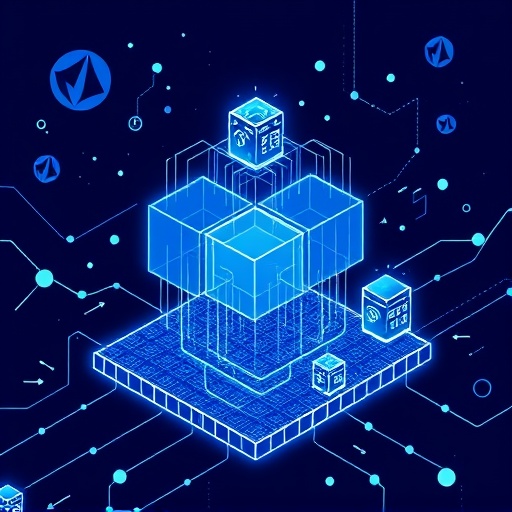
Unlike Bitcoin’s single-chain model, which processes every transaction sequentially and caps out at around 7 transactions per second, or Ethereum 2.0’s ongoing shift to sharding, NEAR’s Nightshade employs dynamic sharding from day one. Here’s how it functions: the network divides into multiple shards, each independently handling its own transactions and state updates in parallel. These shard outputs, known as chunks, then consolidate into the main chain for unified finality. This parallel processing ensures that as traffic surges, NEAR can spin up additional shards automatically—like adding lanes to a highway during rush hour—preventing congestion. The result? Throughput soaring to hundreds of thousands of transactions per second, with finality in just about 1 second, dwarfing Ethereum’s multi-minute waits and making real-time apps feasible.
Doomslug Consensus and WebAssembly Runtime
Complementing Nightshade is the Doomslug consensus protocol, a nimble system for block production and rapid finality. Validators reach agreement in mere seconds by building on the previous block while skipping faulty ones, minimizing downtime and slashing confirmation times. This efficiency stems from Doomslug’s design, which tolerates minor hiccups without halting the entire network, ensuring steady performance even under stress.
Furthermore, NEAR powers its smart contracts via WebAssembly (WASM), a high-performance, platform-agnostic binary format. Developers can code in popular languages like Rust or AssemblyScript, compiling to WASM for blazing execution speeds and portability. This contrasts sharply with Ethereum’s Solidity-centric world, which locks devs into one ecosystem. WASM’s flexibility lowers barriers, drawing in traditional programmers and accelerating NEAR’s app ecosystem growth. In essence, Bitcoin guards value as digital gold but scales poorly; Ethereum pioneered smart contracts and DeFi yet battles high fees and congestion. NEAR builds on both, fusing sharding and Doomslug for a low-cost, dev-friendly platform primed for AI and mass-scale Web3.
What Are NEAR’s Tokenomics? A Deep Dive into Supply, Distribution, and Inflation
The NEAR token fuels the entire NEAR Protocol ecosystem, with tokenomics meticulously crafted to motivate participants, foster sustainability, and drive long-term value. Grasping its supply dynamics, allocation strategy, and inflation-deflation balance is key to gauging NEAR’s investment potential.
Initial Supply and Inflation Model
NEAR launched with a total initial supply of 1 billion tokens. Departing from Bitcoin’s hard-capped 21 million, NEAR embraces a hybrid inflation-deflation framework. Each year, 5% new tokens enter circulation: roughly 90% reward stakers and validators for securing the network, incentivizing robust participation; the remaining 10% flows to the Protocol Treasury for funding ecosystem grants, developer tools, and community initiatives. This setup jumpstarts network effects by ensuring early validators and builders are well-compensated, gradually tapering as adoption matures.
Powerful Deflation Mechanics: Fee Burns and Developer Rebates
To counter inflation, NEAR burns up to 70% of every transaction fee, permanently removing tokens from circulation and exerting downward pressure on supply—like a central bank mopping up excess currency. This mechanism activates automatically with every trade, contract call, or interaction, directly tying token scarcity to real usage. The other 30%? It funnels back to smart contract developers as rebates, proportional to their apps’ activity. This genius incentive loop rewards popular dApps, spurs innovation, and creates a virtuous cycle where more usage boosts developer earnings, drawing top talent and premium projects to NEAR.
Token Allocation and Utility
Initial distribution spreads risk and alignment: 17% to the core team for sustained commitment, 17% for community grants to nurture growth, and 12% via community sales to early backers. NEAR tokens serve critical roles:
- Network Fees: Covering transaction costs and contract executions, keeping operations affordable.
- Staking and Validation: Lock up tokens to validate blocks or delegate to validators, earning yields while bolstering security.
- Governance: Token holders vote on protocol upgrades, shaping NEAR’s trajectory democratically.
This balanced model—blending issuance with burns and creator incentives—cultivates a self-sustaining economy poised for enduring expansion.
What Is the Origin and Evolution of NEAR Protocol?
NEAR Protocol’s journey kicked off with a passion for artificial intelligence, morphing into a Layer 1 powerhouse tackling blockchain scalability head-on. Its timeline brims with breakthroughs and strategic pivots, especially post-2026, when AI reclaimed center stage in its roadmap.
Founders and Initial Vision
Launched in 2018 by tech luminaries:
- Illia Polosukhin: Ex-Google researcher and co-author of the seminal Transformer paper, the bedrock of today’s large language models, bringing AI expertise to the table.
- Alexander Skidanov: Former Microsoft engineer and MemSQL (now SingleStore) CTO, master of scalable databases.
They started with AI models but hit infrastructure walls for massive data and compute. Spotting blockchain’s potential pitfalls—like Ethereum’s gas wars—they built NEAR from scratch to fuse scalability, usability, and decentralization, enabling AI to scale in Web3.
Milestones and Ecosystem Growth
- 2018: Foundation laid, core tech prototyped.
- 2020: Mainnet phased rollout activates Nightshade and Doomslug, proving high-performance viability.
- 2021: Explosive expansion via Rainbow Bridge for trustless Ethereum-NEAR asset flows, boosting liquidity; Aurora launches as EVM-compatible layer, easing Ethereum dApp migrations to NEAR’s cheap, fast rails.
- 2026 Onward: Bold AI pivot cements NEAR as “AI Blockchain,” prioritizing chain abstraction and user-owned AI. Plans include proprietary AI models, NVIDIA partnerships for decentralized compute, empowering users to own AI data/models on-chain.
From AI roots to scalability solver and back to AI frontrunner, NEAR embodies relentless innovation, hinting at blockchain-AI convergence.
What Are NEAR Protocol’s Pros and Cons? Essential Analysis Before Investing
NEAR shines in Layer 1 innovation and vision but grapples with cutthroat competition and risks. A balanced pros-cons breakdown arms investors with clarity.
Key Strengths of NEAR
-
Unrivaled Scalability and Speed
Nightshade sharding and Doomslug deliver hundreds of thousands of TPS with 1-second finality. As demand spikes, shards auto-scale, sidestepping rivals’ chokepoints and paving Web3 mass adoption.
-
Ultra-Low Fees
Efficiency keeps costs pennies per tx, unlocking microtransactions and high-frequency apps that falter on pricier chains.
-
Superior UX: Human-Readable Addresses and Chain Abstraction
yourname.near ditches hex hell; chain abstraction hides multi-chain complexity, letting one account rule them all—crucial for mainstream breakthrough.
-
AI Heritage and Strategic Shift
Polosukhin’s Transformer cred plus 2026 AI focus crafts a narrative edge, luring AI devs with user-owned AI promises.
-
Developer Magnet
WASM supports Rust et al., slashing Solidity lock-in; rebates tie earnings to usage, fueling dApp booms.
Main Weaknesses and Risks
-
Ecosystem Still Growing
dApps, users, TVL lag Ethereum L2s/Solana; network effects demand heavy marketing/lures.
-
Crowded Layer 1 Arena
Solana, Avalanche, Polkadot vie fiercely; NEAR must prove differentiation amid rollups’ rise.
-
Early-Stage AI Vision
User-owned AI tantalizing but nascent—landing tech, monetization, adoption unproven.
-
Centralization Concerns
PoS validator concentration risks persist; deeper decentralization needed.
NEAR’s tech/user/AI bets gleam bright, but ecosystem/competition/AI risks loom. Like a high-growth tech firm, rewards match the gambles.
How Can You Stake NEAR for Passive Income? Complete Beginner Guide (No Mining Involved)
NEAR’s PoS skips energy-guzzling PoW mining; instead, staking NEAR secures the chain and yields passive returns for participants.
Staking Fundamentals
Users stake tokens to validators or run nodes themselves. Validators propose/validate blocks, earning rewards shared with delegators minus fees—securing the net while profiting.
Two Staking Paths
-
Run as Validator
Tech-heavy: host full nodes, stake big, face slashing for downtime/misbehavior. Pros only.
-
Delegate to Validators
Easy mode: pick trusted validators (5-10% fees), retain control, share rewards. Ideal for most.
Step-by-Step Delegation
- Pick Wallet: MyNearWallet/HERE for .near ease.
- Acquire NEAR: Buy on Binance/Kraken, withdraw to wallet.
- Select Validator: Review lists for low fees, uptime, stake.
- Stake: Input amount, tx confirms; unstake cooldown applies.
Rewards and Risks
APYs hover 8-10%, auto-compounding. Risks: price volatility, validator fails (pick wisely), unstake delays.
Staking turns holdings productive; DYOR validators for safe yields.

What Lies Ahead for NEAR Protocol? Key Upgrades, Roadmap, and Hurdles
NEAR eyes ambitious horizons as AI blockchain via chain abstraction, blending tech upgrades with ecosystem leaps—though execution won’t be easy.
Roadmap Catalysts: Chain Abstraction and AI Fusion
-
Full Chain Abstraction Rollout
One account bridges chains invisibly via unified UX/cross-chain ops, slashing Web3 friction for billions.
-
Native AI Models and Integrations
On-chain AI storage/training/compute; user-owned data/models redefine decentralized intelligence.
-
NVIDIA-Like Partnerships
Decentralized GPU markets with hardware giants could supercharge AI infra, drawing devs/investors.
Challenges on the Horizon
-
Tech Complexity
Secure multi-chain/AI ops demand flawless engineering; delays erode trust.
-
Adoption Wars
Outshine centralized AI/blockchains via proven superiority/ecosystem spends.
-
Regulatory Flux
Evolving rules could snag global ops/compliance.
NEAR’s moonshot—AI-Web3 synergy—promises disruption if conquered.
Common Questions About NEAR Protocol (FAQ)
Will NEAR coin reach $100?
Predicting crypto prices is highly speculative, and we can’t offer investment advice or profit guarantees. Whether NEAR hits $100 hinges on factors like progress in chain abstraction and AI blockchain vision, ecosystem expansion, market sentiment, and rivalry with Solana or Ethereum Layer 2s. Success in user/developer attraction and tech delivery could skyrocket market cap. Focus on fundamentals and market cycles.
Is NEAR better than Solana?
“Better” depends on criteria. Solana boasts monolithic high TPS but occasional outages. NEAR’s Nightshade sharding yields dynamic scaling, low fees, fast finality. Paths differ: Solana maxes single-chain speed; NEAR shards for growth, excelling in UX (human-readable accounts, chain abstraction) and AI. NEAR differentiates there, but Solana leads ecosystem/TPS. Choose per tech outlook.
How to choose a NEAR wallet?
Top picks for NEAR:
- MyNearWallet: Official web wallet with .near accounts, full-featured ease.
- HERE Wallet: Mobile-friendly with .near support, great for on-the-go staking/assets.
- Ledger / Trezor: Hardware for big holdings; pair with MyNearWallet for security.
Download from official sources; secure your seed/private keys.
Has NEAR Protocol ‘died’?
Not accurate. Crypto cycles bring volatility; price dips are normal. NEAR’s team/community thrive. Since 2026, foundation drives AI blockchain/chain abstraction pivots as catalysts. Dev activity/monthly users grow steadily. Gauge by innovation, growth, engagement—not short-term charts.
